



Decoding Your Health: The Ultimate Urine Color Guide
Did you know that one of the most powerful indicators of your daily health is something you flush away multiple times a day?
Your urine color is a fascinating, real-time window into your body’s hydration levels, dietary habits, and overall wellness.
Understanding what your urine color means can help you optimize your hydration, recognize when you might be taking too many vitamins, or even catch potential health issues before they become severe.
Pro Tip: Looking at urine diluted in toilet water can sometimes skew the color. If you want to take an easier, more accurate look at your urine color to compare it against this guide, we highly recommend using a clear, medical-grade container like the urine cup product available on LabMedUSA.
The Hydration Spectrum: What Normal Looks Like
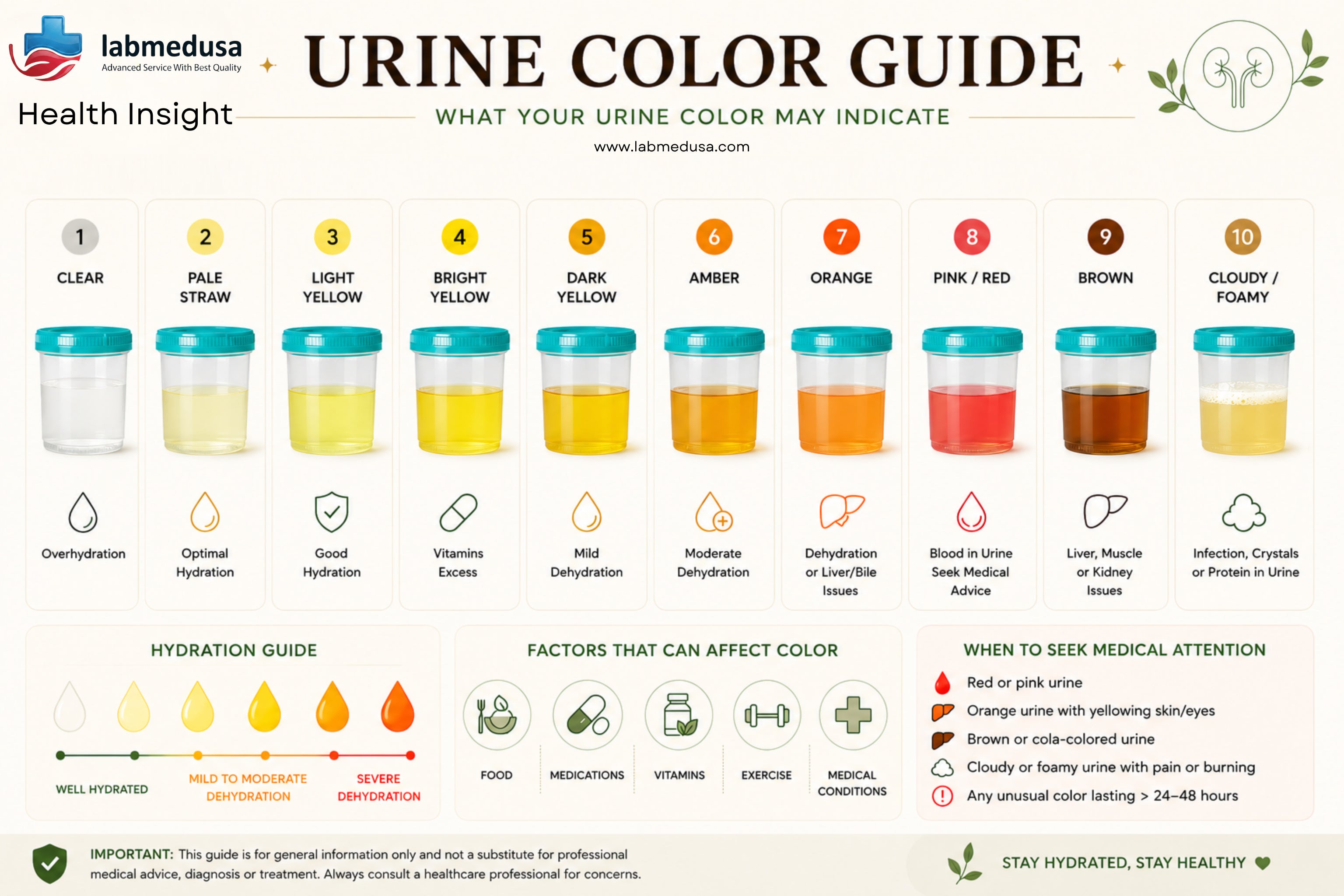
According to the Urine Color Guide Image, your urine color naturally fluctuates based on how much water you drink. Here is what the lighter end of the spectrum tells you:
-
1. Clear (Overhydration): If your urine is completely clear like water, you are drinking too much. While hydration is crucial, overhydration can dilute essential electrolytes in your blood.
-
2. Pale Straw (Optimal Hydration): This is the gold standard! A pale, transparent yellow indicates that your body is perfectly hydrated.
-
3. Light Yellow (Good Hydration): You are still in the healthy, "well-hydrated" zone. Keep up your current water intake!
-
4. Bright Yellow (Vitamins Excess): If your urine looks like neon highlighter fluid, don't panic. This bright yellow hue is typically caused by an excess of B-vitamins being safely flushed out of your system.
-
5. Dark Yellow (Mild Dehydration): This is your body’s gentle nudge to drink a glass of water. You are entering the mild dehydration zone.
-
6. Amber (Moderate Dehydration): An amber or honey-like color is a clear warning sign of moderate dehydration. You need to actively replenish your fluids.
Warning Signs: When Color Indicates More Than Hydration
-
7. Orange: While severe dehydration can cause orange urine, it can also be a sign of underlying liver or bile duct issues.
-
8. Pink / Red: This usually indicates the presence of blood in the urine (hematuria). Unless you've recently eaten a large amount of beets or blackberries, you should seek medical advice immediately.
-
9. Brown: Brown or "cola-colored" urine is a serious warning sign. It can point to severe liver disease, muscle breakdown (rhabdomyolysis), or kidney issues.
-
10. Cloudy / Foamy: If your urine is consistently cloudy or unusually foamy, it may suggest a urinary tract infection (UTI), the presence of kidney stones (crystals), or excess protein in the urine, which can be an early sign of kidney distress.
Everyday Factors That Can Affect Urine Color
Before you rush to the doctor over a strange tint in the LabMedUSA urine cup, consider the external factors that can temporarily alter your urine color:
-
Food: Natural pigments in foods like beets, berries, carrots, and fava beans can change your urine color.
-
Medications: Many prescription and over-the-counter drugs contain dyes or chemical compounds that alter urine color.
-
Vitamins: As mentioned, water-soluble vitamins (especially B-complex and Vitamin C) will turn urine bright yellow.
-
Exercise: Intense physical exertion without adequate fluid replacement can lead to dark, concentrated urine.
-
Medical Conditions: Chronic illnesses affecting the liver, kidneys, or bladder will directly impact how your urine looks.
When to Seek Immediate Medical Attention
While mild dehydration can be fixed with a few glasses of water, certain symptoms require professional evaluation. You should consult a healthcare professional if you experience:
-
Red or pink urine (not linked to food/medication).
-
Orange urine accompanied by yellowing of the skin or eyes (jaundice).
-
Brown or cola-colored urine.
-
Cloudy or foamy urine accompanied by pain or burning during urination.
-
Any unusual urine color that persists for more than 24 to 48 hours.
Stay Hydrated, Stay Healthy!
Disclaimer: The information provided in this guide and the referenced urine color guide image is for general educational purposes only and is not a substitute for professional medical advice, diagnosis, or treatment. Always consult a healthcare professional for concerns regarding your health.
LabMedUSA, Laboratory and Medical Equipment Supplier in California, USA



Leave a comment