



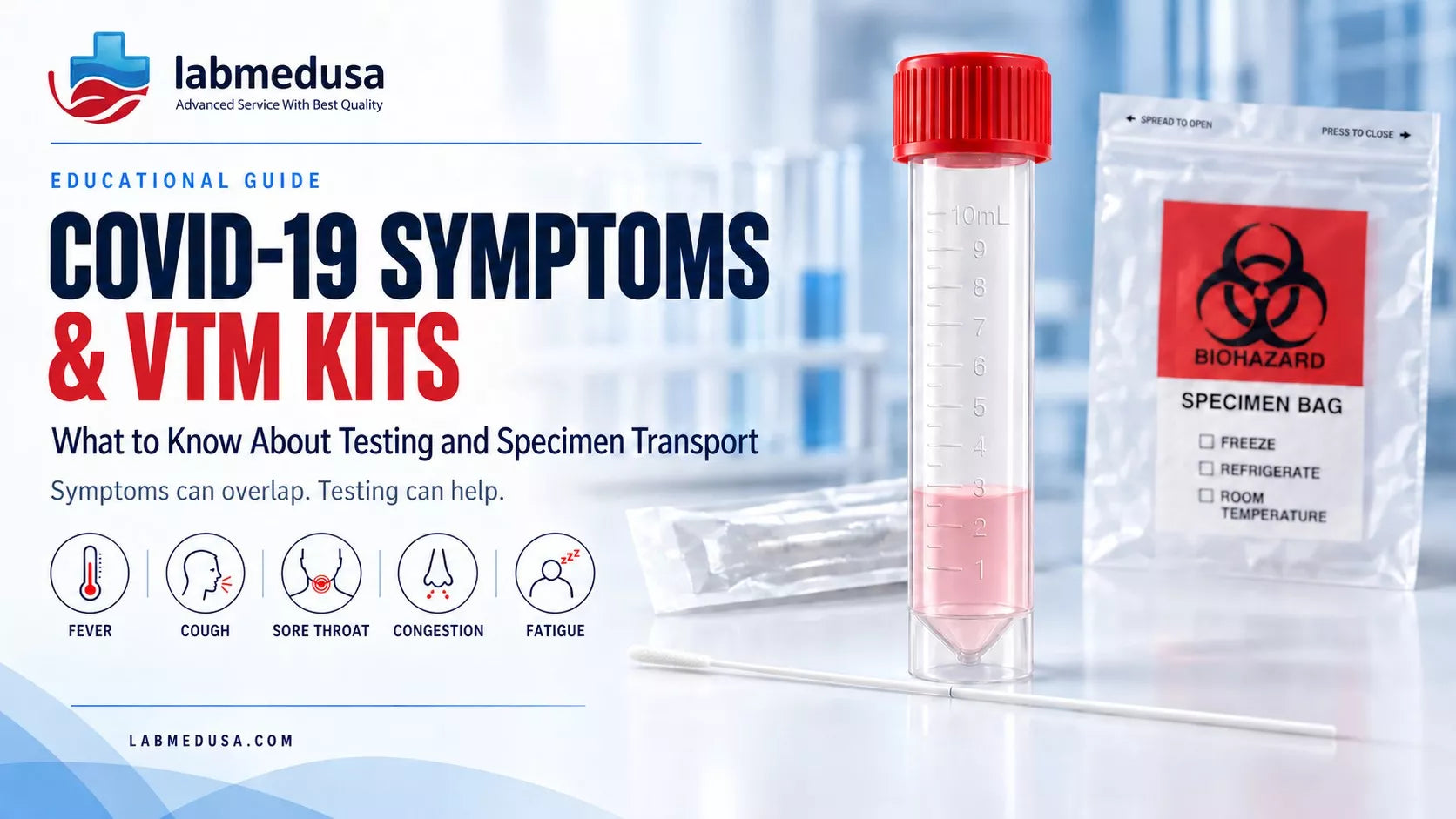
COVID-19 Symptoms and VTM Kits: What to Know About Testing and Specimen Transport
COVID-19 can begin with symptoms that look very similar to a cold, influenza, or another respiratory infection. A cough, sore throat, congestion, fatigue, or fever may raise concern, but symptoms alone cannot confirm which virus is responsible. Testing is what helps connect a person’s symptoms with a more reliable answer.
For laboratory-based COVID-19 testing, collecting the specimen is only the first part of the process. The swab, transport medium, tube, labeling, packaging, storage conditions, and testing method must work together. This is where a viral transport medium, often called VTM, may be used.
This guide explains common COVID-19 symptoms, when testing may be helpful, what a VTM kit is, and why compatibility matters throughout a nasal swab specimen transport workflow.
What Are the Common Symptoms of COVID-19?
People with COVID-19 may experience mild symptoms, severe illness, or no noticeable symptoms. According to the Centers for Disease Control and Prevention, possible COVID-19 symptoms include:
-
Fever or chills
-
Cough
-
Shortness of breath or difficulty breathing
-
Sore throat
-
Congestion or a runny nose
-
New loss of taste or smell
-
Fatigue
-
Muscle or body aches
-
Headache
-
Nausea or vomiting
-
Diarrhea
This is not a complete list. Symptoms can change as the virus evolves and may vary with vaccination status, prior infection, age, and individual health factors. The CDC notes that symptoms may appear 2 to 14 days after exposure.
Cold, Flu, or COVID-19? Symptoms Can Overlap
COVID-19 and influenza are caused by different viruses, but they can produce many of the same symptoms. The common cold can also cause congestion, coughing, fatigue, headache, and sore throat.
That overlap is why a symptom checklist should be treated as a prompt to consider testing or medical advice, not as a diagnosis. Even a new loss of taste or smell, which is associated with COVID-19, should not replace an appropriate test or clinical evaluation.
Some laboratory nucleic acid amplification tests, including certain PCR tests, can test for SARS-CoV-2 and influenza from the same specimen. Availability and specimen requirements depend on the test system and the laboratory performing the analysis.
When Should Someone Consider a COVID-19 Test?
COVID-19 testing can help identify a current SARS-CoV-2 infection and guide decisions about medical care and reducing transmission. A person may consider testing when they develop compatible symptoms, after a known exposure, or when advised by a healthcare provider, employer, school, care facility, or public health authority.
The two main types of viral tests are:
Nucleic acid amplification tests: NAATs, including PCR tests, detect viral genetic material. Many are performed in a laboratory using a collected respiratory specimen.
Antigen tests: These rapid tests look for viral proteins. They can provide results quickly, but a single negative antigen result may not rule out infection. Follow the test manufacturer’s current instructions and FDA recommendations regarding repeat testing.
People who have a higher risk of severe illness should contact a healthcare professional promptly when symptoms begin or a test is positive. COVID-19 treatments work best when started within the recommended treatment window.
When COVID-19 Symptoms Need Emergency Attention
Seek emergency medical care for severe or concerning symptoms. CDC emergency warning signs include:
-
Trouble breathing
-
Persistent chest pain or pressure
-
New confusion
-
Inability to wake or stay awake
-
Pale, gray, or blue-colored skin, lips, or nail beds, depending on skin tone
This list is not exhaustive. In the United States, call 911 for a medical emergency. In other locations, contact the appropriate local emergency service.
What Is a VTM Kit?
VTM stands for viral transport medium. It is a prepared transport medium used in certain validated laboratory workflows to help maintain a collected viral specimen during the period between collection and testing.
A VTM kit or viral specimen collection system may include a compatible sterile swab, a tube containing a specified volume of transport medium, a secure cap, labels, secondary packaging, and instructions for use. Kit contents vary by manufacturer and intended test method.
VTM is not a COVID-19 test. It does not generate a positive or negative result, and it is not a medication or disinfectant. Its role is specimen transport within a defined laboratory workflow.
Not Every COVID-19 Test Uses VTM
The correct collection method depends on the test. Some laboratory tests use viral transport medium, while others specify universal transport medium, saline, another validated medium, or a dry swab. Rapid antigen self-tests generally use the extraction buffer supplied with that specific test, not a generic VTM tube.
The test instructions for use and the receiving laboratory should determine:
-
The accepted specimen type
-
Whether the specimen is nasal, mid-turbinate, nasopharyngeal, or another type
-
The required swab material and shaft design
-
The approved transport medium and volume
-
The accepted tube dimensions and closure
-
Storage temperature and maximum transport time
-
Labeling, packaging, and delivery requirements
Substituting a different swab, tube, or medium without validation may affect specimen quality or test performance.
What Is the Pink Liquid in Some Transport Tubes?
Some transport media have a pink or red appearance, while other approved media may be clear or another color. Appearance alone cannot identify the liquid or confirm that it is VTM.
Only the product label, lot information, manufacturer’s instructions, and laboratory documentation can verify what a tube contains. A pink liquid should never be assumed to be viral transport medium based only on color. It also should not be added to an empty tube unless a validated procedure specifically directs trained personnel to do so.
A High-Level VTM Specimen Collection Workflow
Clinical specimen collection should be performed by trained personnel or according to the exact instructions supplied with an authorized self-collection system. A general professional workflow may include:
-
Perform hand hygiene using soap and water or an appropriate alcohol-based hand rub.
-
Put on clean gloves and any additional personal protective equipment required by the setting and risk assessment.
-
Collect the respiratory specimen using the specified swab and collection technique.
-
Place the swab into the compatible transport medium without touching the swab tip or inside of the tube.
-
If directed, snap the shaft only at its marked breakpoint so the cap can close securely.
-
Tighten the cap, label the primary tube, and place it in the specified secondary specimen bag or transport packaging.
-
Remove and discard gloves and other disposable collection materials according to facility procedures.
-
Perform hand hygiene immediately after removing gloves.
-
Store and transport the specimen according to the test instructions and receiving laboratory requirements.
An alcohol prep pad is not a substitute for proper hand hygiene. Unless a specific procedure says otherwise, do not use a prep pad inside the nose, on the swab tip, or inside the specimen tube. Follow the prep pad’s external-use labeling.
What Does a Biohazard Specimen Bag Do?
A biohazard specimen bag can serve as secondary packaging for a sealed clinical specimen container. Depending on the bag and facility procedure, it may provide a separate document pouch and space for absorbent material.
The primary tube must still be securely closed and correctly labeled. A specimen bag does not correct an incompatible tube, leaking cap, incorrect medium, labeling error, or missed storage requirement. Facilities should follow applicable packaging, handling, and transport regulations as well as the receiving laboratory’s instructions.
Understanding the LabMedUSA 10 mL Transport Tube
The LabMedUSA 10 mL sterile screw-cap transport tube is listed as a polypropylene tube with molded volume markings, a leak-resistant screw-cap closure, and packaging of 500 tubes.
Before using any general specimen transport tube in a SARS-CoV-2 testing workflow, confirm the required medium, fill volume, swab design, tube specifications, processing equipment, and storage conditions with the test instructions and receiving laboratory. The transport tube is one component. The VTM is another component, and the complete collection system must be validated for its intended use.
Facilities reviewing broader laboratory collection and transport supplies can explore laboratory specimen collection and transport supplies from LabMedUSA and compare product specifications with their written laboratory requirements.
The Main Takeaway
COVID-19 symptoms can resemble a cold or flu, so symptoms alone cannot provide a reliable diagnosis. Testing can help determine whether a current SARS-CoV-2 infection is present and guide next steps.
For laboratory testing, proper specimen handling matters from the moment the swab is opened until the sample reaches the analyzer. A VTM kit is not simply a swab and any available tube. It is a compatible collection and transport system built around the requirements of a specific test and receiving laboratory.
When evaluating COVID-19 testing supplies, verify the swab, transport medium, tube, packaging, time, temperature, and instructions together. That careful approach supports a clearer workflow and avoids unsupported assumptions about what a product contains or how it may be used.
References
This article is for general educational purposes and does not replace medical advice, a test manufacturer’s instructions for use, a laboratory’s validated procedure, or applicable specimen transport regulations.



Leave a comment