



The Essential Role of Lock Boxes in Modern Laboratories: Protecting Specimens, Medications, and Sensitive Materials
Laboratories handle some of the most valuable assets in healthcare not just expensive equipment, but also patient specimens, diagnostic samples, medications, confidential documents, and regulated materials. Every specimen represents a patient's health, making secure handling a critical responsibility.
While laboratories invest heavily in advanced analyzers and diagnostic technology, one simple piece of equipment often plays an equally important role in maintaining security and organization: the medical lock box.
A medical specimen lock box helps laboratories maintain controlled access, specimen integrity, workflow efficiency, regulatory compliance, and professional organization. Whether used in hospitals, physician offices, diagnostic centers, or research laboratories, secure storage solutions reduce risks while improving daily operations.
Why Laboratory Security Matters
Every day, laboratories process hundreds or even thousands of specimens. These may include:
- Blood samples
- Urine specimens
- Tissue biopsies
- Swab collections
- Diagnostic test kits
- Patient paperwork
- Prescription medications
- Laboratory documentation
Without proper storage, these sensitive materials may be exposed to:
- Unauthorized access
- Accidental handling
- Misplacement
- Contamination risks
- Documentation errors
- Workflow interruptions
A secure laboratory lock box provides an additional layer of protection that supports both operational efficiency and patient safety.
What Is a Medical Lock Box?
A medical lock box is a secure metal storage container designed to safely organize and protect medical specimens, medications, laboratory supplies, and confidential documents.
Unlike standard storage containers, medical lock boxes include a keyed locking mechanism that limits access to authorized personnel only.
These storage units are commonly found in:
- Clinical laboratories
- Hospital laboratories
- Physician offices
- Pharmacies
- Diagnostic testing centers
- Medical research facilities
- Blood collection stations
Their primary purpose is to keep sensitive materials secure while remaining easily accessible to trained healthcare professionals.
Key Functions of a Laboratory Lock Box
1. Secure Medical Specimen Storage
One of the primary functions of a laboratory lock box is protecting collected specimens before analysis or transportation.
Specimens often wait for:
-
- Batch processing
- Courier pickup
- Internal transport
- Quality verification
- Documentation review
Keeping specimens inside a locked container minimizes unnecessary handling and reduces the chance of accidental mix-ups.
Secure specimen storage also helps maintain chain-of-custody procedures where required.
2. Controlled Access to Sensitive Materials
Not every staff member requires access to every specimen or medication.
A keyed lock system helps restrict access to:
Authorized laboratory personnel
Supervisors
Medical technologists
Healthcare providers
Controlled access helps reduce the possibility of unauthorized handling while supporting established laboratory security protocols.
3. Organizing Laboratory Workflows
Laboratories operate most efficiently when every item has a designated location.
A lock box can organize:
-
- Pending specimens
- Completed collections
- Patient documentation
- Transport paperwork
- Medication supplies
- Collection accessories
An organized workspace reduces clutter, speeds retrieval, and minimizes time spent searching for essential materials.
4. Supporting Regulatory Compliance
Healthcare organizations must follow strict policies regarding specimen handling and secure storage.
Although specific requirements vary by facility and jurisdiction, secure storage practices can help support compliance efforts by:
-
- Restricting unauthorized access
- Protecting confidential materials
- Supporting documentation procedures
- Improving accountability
- Encouraging standardized workflows
A secure storage solution becomes an important component of an overall laboratory quality management system.
5. Protecting Confidential Patient Information
Laboratory paperwork often contains sensitive patient information, including:
-
- Patient names
- Medical record numbers
- Test requests
- Physician orders
- Diagnostic information
Storing these documents inside a locking cabinet helps reduce unnecessary exposure while keeping records organized until processing is complete.
6. Improving Sample Transport Organization
Many laboratories transfer specimens between:
-
- Collection sites
- Testing laboratories
- Hospitals
- Diagnostic centers
A dedicated lock box provides a centralized location for organizing materials before transport.
This reduces confusion and helps ensure all required documentation accompanies the specimens.
7. Enhancing Workplace Professionalism
Clean, organized laboratories inspire confidence among staff, inspectors, and patients.
A dedicated medical lock box helps eliminate:
-
- Loose paperwork
- Specimens left on countertops
- Unsecured medical supplies
- Cluttered workstations
Professional organization contributes to smoother operations and reinforces a culture of quality and accountability.
Features That Make an Effective Medical Lock Box
When selecting a laboratory lock box, consider features that support both security and everyday usability.
Secure Key Lock System
A reliable keyed locking mechanism helps restrict access to authorized personnel while protecting valuable contents.
Durable Steel Construction
Metal construction provides long-lasting durability suitable for demanding healthcare environments.
Medium Storage Capacity
A practical storage size accommodates:
-
- Specimen containers
- Laboratory documents
- Medical supplies
- Medications
- Collection accessories
without occupying excessive workspace.
Compact Footprint
Space is valuable in busy laboratories.
A compact design fits comfortably on:
-
- Countertops
- Shelves
- Workstations
- Storage areas
while keeping essential items within easy reach.
Professional Appearance
A clean, neutral finish complements clinical environments and supports an organized workspace.
Easy Access Design
Quick opening and retrieval allow authorized staff to access stored materials efficiently during busy laboratory workflows.
Applications Across Healthcare Settings
A medical specimen lock box is useful in many healthcare environments.
Hospitals
Hospitals use lock boxes to temporarily store collected specimens before laboratory processing or courier transport.
Clinical Laboratories
Laboratories benefit from secure organization of incoming samples, paperwork, and testing materials.
Physician Offices
Clinics often collect specimens throughout the day before scheduled laboratory pickup.
A lock box provides secure interim storage.
Pharmacies
Sensitive medications and controlled materials can be organized in designated secure storage areas according to facility policies.
Diagnostic Centers
Diagnostic facilities frequently process large volumes of patient samples, making secure organization especially important.
Research Laboratories
Research facilities may store study samples, documentation, and project materials requiring restricted access.
Benefits of Using a Medical Lock Box
Implementing secure storage offers several operational advantages:
- Helps protect sensitive medical specimens
- Supports controlled access procedures
- Improves laboratory organization
- Reduces workplace clutter
- Streamlines specimen management
- Enhances workflow efficiency
- Promotes accountability
- Supports quality assurance practices
- Protects confidential documents
- Provides durable long-term storage
Choosing the Right Medical Lock Box
When evaluating laboratory storage solutions, consider:
- Capacity requirements
- Locking mechanism
- Construction quality
- Available workspace
- Ease of cleaning
- Accessibility
- Intended application
- Durability for daily use
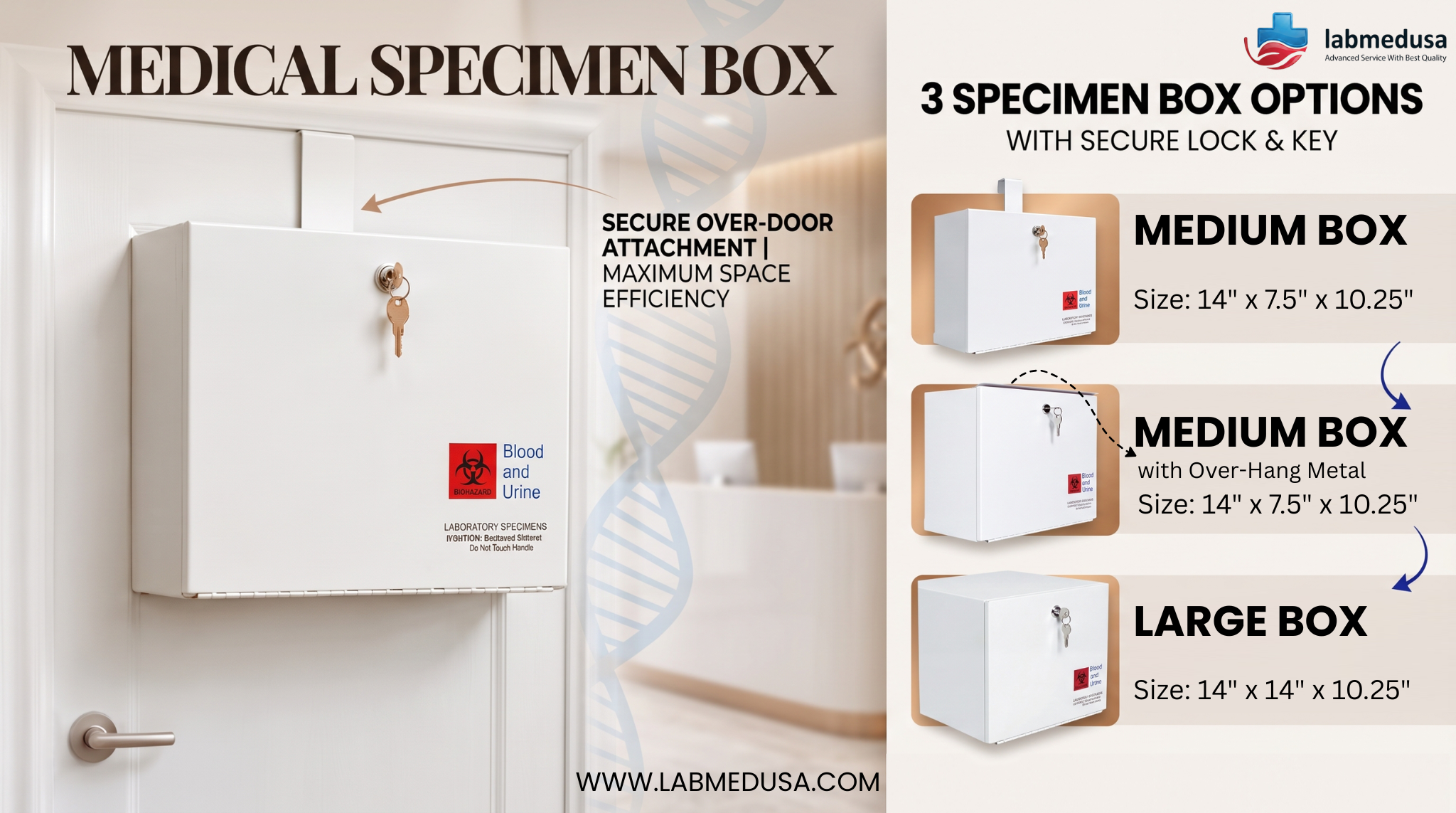
A medium-sized lock box measuring 14" × 7.5" × 10.25" offers an excellent balance between storage capacity and space efficiency, making it suitable for many healthcare facilities.
Product Spotlight: Medical Specimen Box with Lock (Medium)
Designed specifically for healthcare professionals, the Medical Specimen Box with Lock (Medium) provides secure, organized storage for specimens, medications, documents, and sensitive laboratory materials.
Key specifications include:
- Product Type: Medical Lock Box / Locking Storage Cabinet
- Mounting Style: Overdoor Hanger
- Lock Type: Keyed Lock (keys included)
- Material: Durable steel/metal construction
- Finish: Professional white/neutral appearance
Its medium-capacity design makes it ideal for hospitals, clinical laboratories, physician offices, diagnostic testing centers, pharmacies, and other healthcare environments where secure storage and controlled access are priorities.
Frequently Asked Questions
What is a medical lock box used for?
A medical lock box is used to securely store medical specimens, medications, laboratory documents, and sensitive healthcare materials while limiting access to authorized personnel.
Why do laboratories need lock boxes?
Laboratories use lock boxes to improve security, organize workflows, protect confidential information, and help maintain specimen integrity during storage or transport.
Can a lock box improve laboratory organization?
Yes. A designated storage location reduces clutter, improves efficiency, and makes specimens and documents easier to locate when needed.
What materials can be stored in a laboratory lock box?
Depending on facility policies, lock boxes may be used for specimen containers, laboratory paperwork, medications, transport documents, and other sensitive healthcare supplies.
Final Thoughts
Security and organization are fundamental to delivering reliable laboratory services. While advanced diagnostic equipment often takes center stage, simple tools like a medical specimen lock box play a vital role in protecting samples, supporting efficient workflows, and maintaining controlled access to sensitive materials.
A durable steel lock box with a secure keyed locking system offers healthcare professionals a dependable solution for storing specimens, medications, documents, and essential laboratory supplies. By integrating secure storage into everyday operations, laboratories can strengthen organization, reduce unnecessary handling, and support a culture of safety and professionalism.
LabMedUSA, Laboratory and Medical Equipment Supplier in California, USA



Leave a comment