



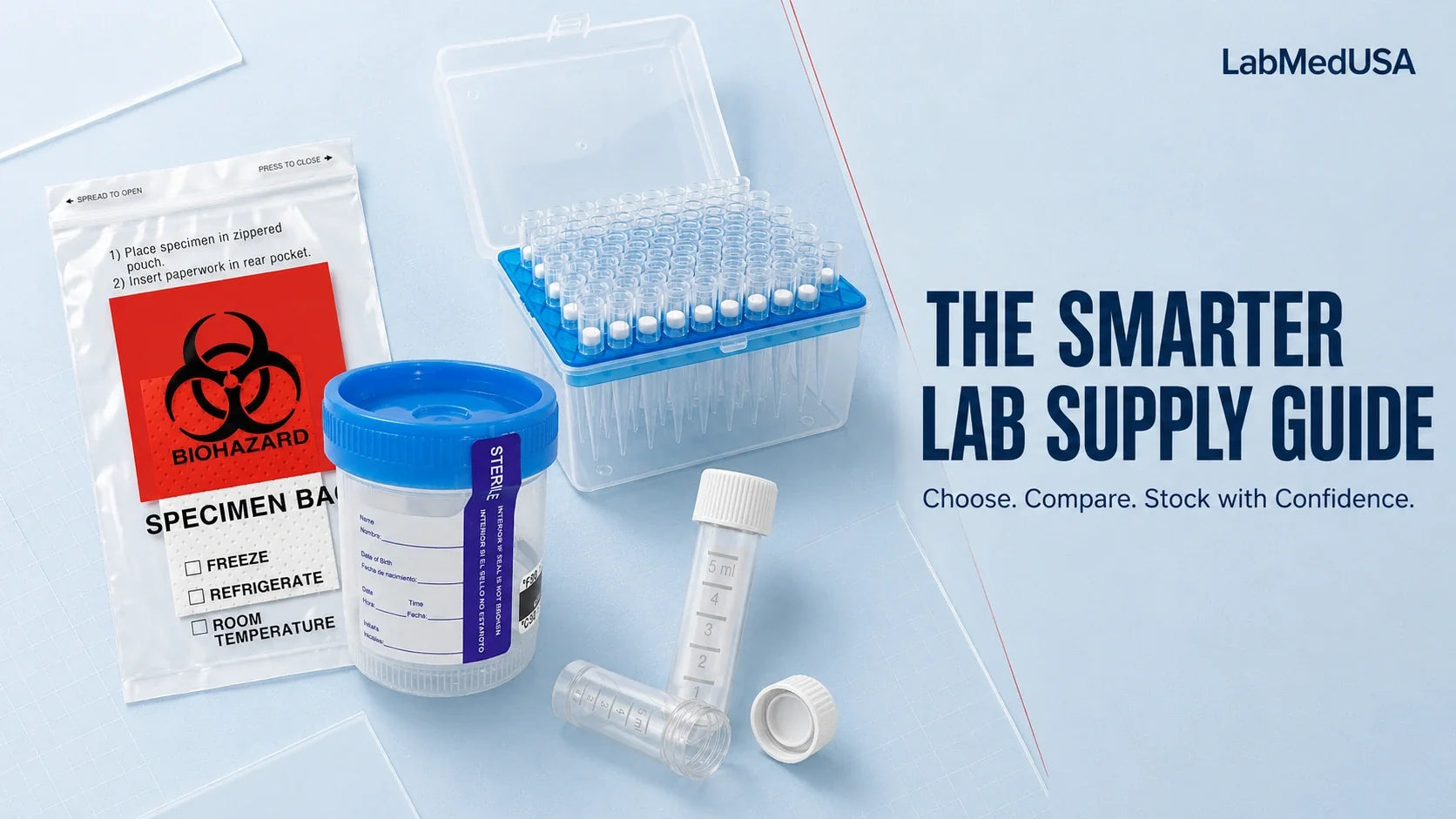
Essential Laboratory Supplies: A Practical Guide for Clinical Labs, Clinics, and Mobile Teams
A reliable laboratory workflow begins well before a specimen reaches an analyzer. It starts with the container used for collection, the supplies available at the draw station, the way the sample is labeled and transported, and whether every item is compatible with the laboratory's established procedure.
Choosing the right laboratory supplies can help teams work more consistently, reduce preventable interruptions, and make routine collection and handling easier for staff. Choosing the wrong size, material, closure, or package quantity can create delays, waste, and unnecessary reordering.
This guide explains the main types of medical laboratory supplies, what to evaluate before ordering, and how to build a practical supply list for clinical laboratories, physician offices, diagnostic centers, mobile phlebotomy services, veterinary clinics, and training programs.
What Are Laboratory Supplies?
Laboratory supplies include the disposable products, reusable tools, safety items, storage products, and equipment used to collect, prepare, handle, transport, analyze, and store specimens.
They generally fall into five groups:
-
Specimen collection supplies, such as urine cups, collection bottles, transport tubes, and sample containers
-
Blood collection and phlebotomy supplies, such as needles, tube holders, tourniquets, alcohol prep pads, gauze, and bandages
-
Specimen handling and transport supplies, such as biohazard specimen bags, absorbent materials, labels, tube racks, and secure transport containers
-
Liquid handling and processing supplies, such as pipette tips, microcentrifuge tubes, conical tubes, and centrifuges
-
Safety, storage, and laboratory equipment, such as personal protective equipment, waste containers, timers, mixers, lock boxes, and blood drawing chairs
The exact list varies by test menu, specimen type, collection setting, equipment, staffing, and facility protocol. A small physician-office laboratory will not stock supplies in the same quantities as a high-volume diagnostic laboratory or mobile collection team.
1. Specimen Collection Supplies
Specimen collection is the first physical step in many testing workflows. The container must be appropriate for the specimen, required volume, test method, and handling process.
Urine specimen cups
When comparing urine collection supplies, review:
-
Capacity and opening diameter
-
Sterile or non-sterile status
-
Screw-cap design and leak resistance
-
Molded graduations and labeling area
-
Presence of a temperature strip, when required by the testing workflow
-
Compatibility with vacuum-transfer systems, when used
-
Individual wrapping and case quantity
A standard sterile urine cup may be suitable for routine collection, while a cup with an integrated transfer device can support workflows that transfer samples into compatible tubes. A 24-hour urine collection requires a much larger container than a routine urinalysis. Match the product to the test protocol instead of treating every urine container as interchangeable.
Transport tubes and sample containers
For laboratory tubes and transport tubes, confirm the stated capacity, dimensions, material, cap type, sterility, and intended use. Even a small difference in tube diameter or length may affect fit in racks, centrifuge rotors, analyzers, and storage systems.
Common materials include polypropylene and polystyrene. Their properties are different, so buyers should verify chemical compatibility, temperature limits, centrifugal-force ratings, and application suitability from the product specifications before use.
2. Blood Collection and Phlebotomy Supplies
A well-organized draw station gives staff the necessary products within reach and helps keep collection steps consistent. Common blood collection supplies include:
-
Blood collection needles or safety winged infusion sets
-
Tube holders and compatible collection tubes
-
Latex-free disposable tourniquets
-
Individually wrapped alcohol prep pads
-
Gauze pads, cotton products, and adhesive bandages
-
Labels and biohazard specimen transport bags
-
Sharps disposal containers
-
Tube racks and blood drawing chairs
Before ordering needles or winged collection sets, verify the gauge, tubing length, connection type, safety mechanism, sterility, and compatibility with the rest of the collection system. For tourniquets, check dimensions, material, single-use status, and latex-free labeling when that is part of your facility's requirements.
Facilities that want to replenish several draw-station essentials can begin with LabMedUSA's blood collection supplies, which include products for preparation, collection, organization, and aftercare.
3. Biohazard Specimen Bags and Transport Supplies
Specimen transport is not simply moving a tube from one location to another. The packaging must help contain the specimen and support the facility's labeling, documentation, and handling process.
OSHA's Bloodborne Pathogens Standard requires blood and other potentially infectious material specimens to be placed in containers that prevent leakage during collection, handling, processing, storage, transport, or shipping. If the outside of the primary container becomes contaminated, it must be placed inside a second container that prevents leakage and is properly labeled or color-coded. Facilities should follow the complete OSHA standard, applicable transport rules, and their own procedures.
When choosing biohazard specimen bags, compare:
-
Bag dimensions and film thickness
-
Zip closure, adhesive closure, or drawstring design
-
Single-pocket or dual-pocket construction
-
Separate document pouch for requisition forms
-
Printed biohazard symbol and color coding
-
Included absorbent material
-
Case quantity and storage footprint
A separate document compartment helps keep paperwork away from the primary specimen area. An absorbent pad can help manage liquid if a primary container leaks, but it does not replace proper closure, validated packaging, staff training, or applicable transport requirements.
Explore 6 x 9-inch biohazard specimen bags with absorbent pads for routine specimen-handling applications. Always confirm that the selected bag and complete packaging configuration are suitable for the specimen, route, and governing requirements.
4. Laboratory Tubes and Centrifugation Supplies
Test tubes, transport tubes, microcentrifuge tubes, and conical centrifuge tubes may look similar, but their specifications can determine whether they work safely and efficiently in a particular process.
Check the following before purchasing:
-
Nominal and working volume
-
Tube length and diameter
-
Polypropylene, polystyrene, glass, or other material
-
Conical or round bottom
-
Screw cap, snap cap, plug cap, or no cap
-
Sterile or non-sterile packaging
-
Graduations and writing area
-
Manufacturer-stated centrifugal-force and temperature limits
-
Compatibility with racks, rotors, analyzers, and storage systems
Do not select a centrifuge tube based on capacity alone. A 15 mL tube from one product line may have different material properties, closure details, or performance ratings from another. Review the technical specifications and follow the equipment manufacturer's instructions.
For benchtop equipment, also evaluate rotor capacity, supported tube size, maximum relative centrifugal force, speed controls, timer functions, power requirements, footprint, cleaning instructions, and warranty support.
5. Pipette Tips and Liquid Handling Supplies
Reliable liquid handling depends on the pipette, tip, technique, and application working together. Laboratories commonly stock multiple tip volumes for different tasks, including 10 µL, 100 µL, 1,000 µL, and other application-specific sizes.
When choosing laboratory pipette tips, consider:
-
Pipette brand and model compatibility
-
Volume range
-
Filtered or non-filtered design
-
Sterile or non-sterile packaging
-
Low-retention properties, when required
-
Racked, reload, or bulk format
-
Aerosol-barrier requirements
-
Packaging quantity and storage space
The word “universal” should not replace a compatibility check. Confirm fit with the exact pipette model before committing to a large order. Laboratories looking for higher-volume liquid handling can review 1,000 µL universal filtering pipette tips and compare the listed dimensions and packaging with their needs.
6. Safety Supplies and Medical Waste Containers
Safety products should reflect the hazards present in the workplace and the facility's exposure-control plan. Depending on the setting, the supply list may include gloves, protective clothing, face and eye protection, disinfecting supplies, biohazard bags, sharps containers, and regulated medical waste containers.
OSHA requires contaminated sharps to be discarded in containers that are closable, puncture-resistant, leak-resistant on the sides and bottom, and properly labeled or color-coded. Choose the correct type and placement based on the work area, expected volume, and facility procedures.
LabMedUSA offers medical waste containers for professional healthcare environments. Product selection should always follow the manufacturer's instructions and all applicable federal, state, local, and facility requirements.
7. Laboratory Equipment, Organization, and Storage
Small pieces of equipment can have a large effect on daily workflow. Depending on the laboratory, essential items may include:
-
Benchtop centrifuges
-
Tube rotators and mixers
-
Test tube racks
-
Laboratory timers
-
Pipettes
-
Secure specimen lock boxes
-
Medical refrigerators or cold-transport products
-
Blood drawing chairs
When comparing laboratory equipment, look beyond the purchase price. Consider the equipment's capacity, dimensions, electrical requirements, compatible consumables, cleaning needs, operating range, user controls, documentation, warranty, and service options.
Organization matters too. Clearly assigned storage locations, visible labels, and practical par levels help staff find supplies quickly and notice shortages before they interrupt testing or collection.
Build a Smarter Laboratory Supply List
A useful purchasing list should contain more than product names. For every recurring item, record:
-
Exact product description and internal item number
-
Required size, capacity, material, and closure
-
Sterile or non-sterile status
-
Approved manufacturer or acceptable equivalent
-
Pack and case quantity
-
Average weekly or monthly use
-
Reorder point and backup quantity
-
Storage conditions and available shelf space
-
Lot and expiration tracking requirements
-
Primary and backup supplier
Review usage regularly. Fast-moving consumables may benefit from bulk purchasing, while products with limited shelf life, special storage requirements, or changing demand need more conservative order quantities.
A simple reorder formula is:
Reorder point = average use during supplier lead time + safety stock
For example, if a laboratory normally uses 500 tubes during the time it takes to receive a new order and keeps 200 tubes as safety stock, the reorder point is 700 tubes. Adjust the calculation for seasonal demand, delivery variability, storage limits, and criticality.
Common Laboratory Supply Purchasing Mistakes
Ordering by product name without checking specifications
Names such as “15 mL tube” or “urine cup” do not provide enough information. Dimensions, material, sterility, closure, and compatibility can vary.
Comparing case prices instead of usable unit costs
Confirm the number of pieces per pack and packs per case. Include shipping, expected waste, shelf life, and storage needs when comparing value.
Allowing critical items to reach zero stock
Set reorder points for essential consumables and identify acceptable backup products before a shortage occurs.
Buying excessive quantities without checking expiration and demand
Bulk laboratory supplies can reduce ordering frequency, but only when the facility can store and use them appropriately.
Assuming similar-looking products are interchangeable
Small differences in size, material, cap design, or equipment compatibility may matter. Verify the complete specification before substitution.
Laboratory Supplies Checklist
Use this starting checklist and adapt it to your test menu and procedures:
-
Specimen cups and collection containers
-
Transport tubes and laboratory tubes
-
Centrifuge and microcentrifuge tubes
-
Blood collection needles, holders, and tubes
-
Tourniquets, prep pads, gauze, and bandages
-
Pipette tips and transfer pipettes
-
Tube racks, labels, and laboratory timers
-
Biohazard specimen transport bags and absorbent material
-
Sharps and medical waste containers
-
Required personal protective equipment
-
Centrifuges, mixers, and other benchtop equipment
-
Secure specimen storage or lock boxes
-
Cleaning and disinfecting supplies appropriate to the work area
This list is a procurement starting point, not a substitute for a facility-specific risk assessment, test procedure, safety plan, or regulatory review.
Frequently Asked Questions About Laboratory Supplies
What are the most commonly used clinical laboratory supplies?
Common supplies include specimen cups, collection and transport tubes, blood collection products, pipette tips, transfer pipettes, biohazard specimen bags, labels, tube racks, prep pads, gauze, bandages, personal protective equipment, and waste containers. The correct list depends on the facility's tests and collection services.
What is the difference between laboratory supplies and laboratory equipment?
Laboratory supplies often refer to consumable or frequently replaced items, such as tubes, cups, pipette tips, and specimen bags. Laboratory equipment generally refers to durable products such as centrifuges, mixers, pipettes, refrigerators, chairs, and storage units. Some vendors use the terms together as “lab equipment and supplies.”
Which laboratory supplies are best to buy in bulk?
Frequently used products with stable demand and suitable shelf life are often good candidates for bulk purchasing. Examples may include tubes, pipette tips, prep pads, tourniquets, specimen bags, and urine cups. Check expiration dates, storage space, cash flow, and actual usage before increasing order quantities.
How do I choose the right specimen container?
Start with the specimen type and test method. Then confirm required volume, container material, sterility, closure, preservative requirements, labeling needs, and compatibility with transport and laboratory equipment. Follow the test procedure and manufacturer instructions.
How often should a laboratory reorder supplies?
Reordering should be based on average usage, supplier lead time, safety stock, storage capacity, and the operational importance of the item. High-use or critical supplies should have documented reorder points rather than being ordered only when the shelf looks low.
Where can clinics and laboratories order medical laboratory supplies?
Laboratories can order from a supplier that provides clear product specifications, dependable communication, suitable pack quantities, and support for the facility's purchasing needs. LabMedUSA serves laboratories, clinics, mobile healthcare professionals, and other medical settings with collection, handling, safety, and laboratory products.
Find Laboratory Supplies for Your Workflow
The best supply choice is the one that matches the specimen, procedure, equipment, staff needs, and purchasing plan. Taking a few minutes to verify specifications before ordering can prevent costly mismatches later.
Browse all laboratory supplies available from LabMedUSA, including specimen collection products, blood collection supplies, urine containers, laboratory tubes, pipette tips, biohazard transport bags, waste containers, and lab equipment.
Need help narrowing down an item? Contact LabMedUSA or email support@labmedusa.com with the product type, required dimensions, estimated quantity, and intended application. Our team will be happy to help you review the available options.



Leave a comment