



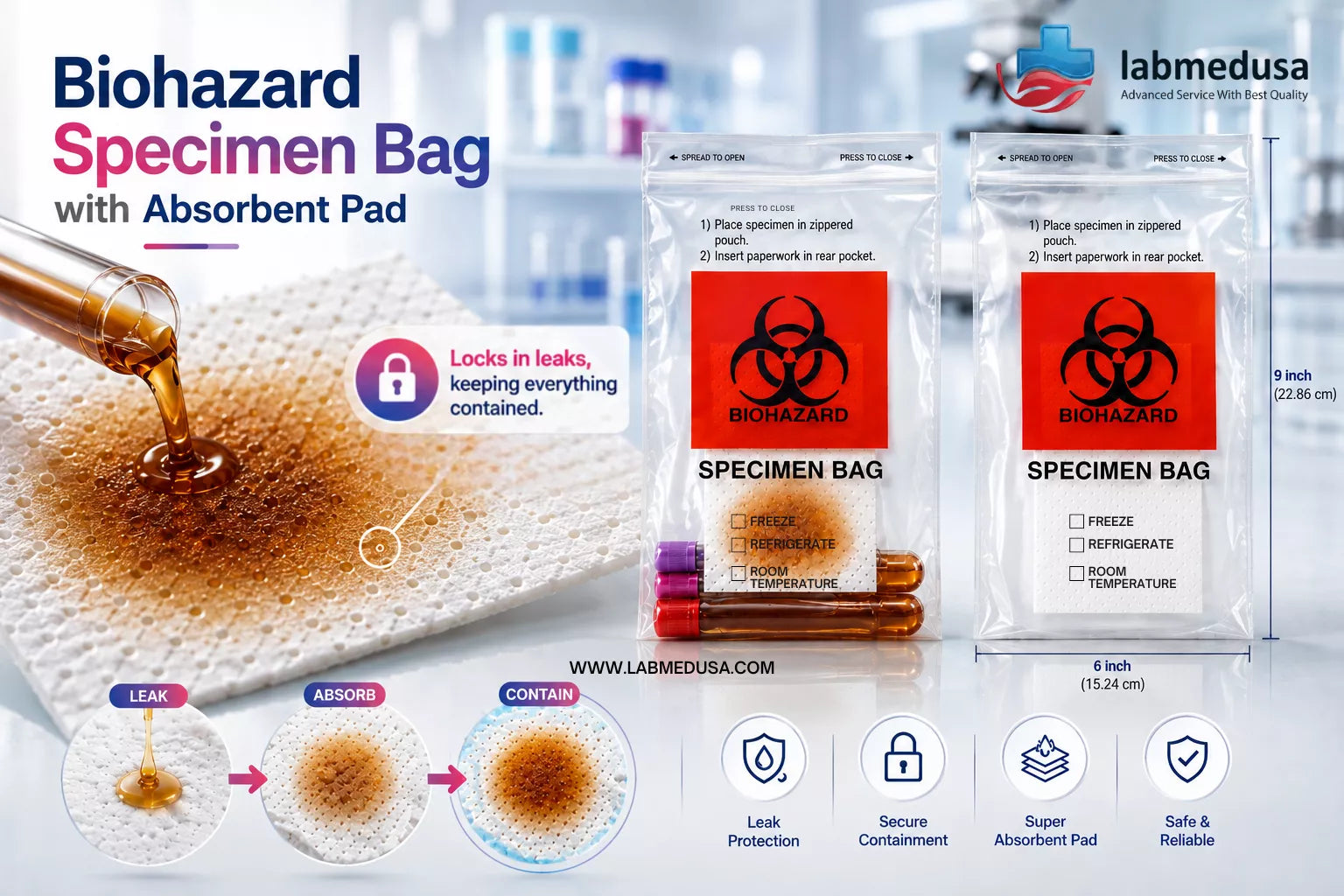
Biohazard Specimen Bags With Absorbent Pads, Locks in Leaks
Biohazard specimen bags are an important laboratory consumable for organized specimen collection, identification, handling, and transport. A well-designed specimen transport bag does more than hold a sample. Features such as a resealable Ziplock closure, separate document pouch, clear LDPE film, and a built-in absorbent pad can make routine laboratory workflows more organized and convenient.
For laboratories, clinics, hospitals, pharmacies, veterinary practices, phlebotomy stations, and research facilities, choosing the right specimen bag means considering size, material, closure type, compartment design, absorbency, and pack quantity.
What Is a Biohazard Specimen Bag?
A biohazard specimen bag is a clear specimen transport pouch designed to organize laboratory samples during collection, handling, storage, and movement between locations. These bags can accommodate tubes, vials, and other commonly handled specimen containers while providing a dedicated area for related paperwork.
The 6 x 9 inch format provides a practical size for routine specimen handling, while the transparent construction allows quick visual inspection of the bag and its contents.
Why Is an Absorbent Pad Important?
Built-In Absorbent Pad
One of the key features of a specimen bag with absorbent pad is the absorbent material positioned inside the specimen compartment. The pad is designed to take up incidental liquid or condensation that may occur inside the bag during routine specimen handling.
This makes the absorbent pad an important differentiating feature compared with a basic plastic specimen pouch. Instead of simply providing a container for the specimen, the bag incorporates an additional internal absorbent layer.
How the Absorbent Pad Works
When incidental liquid reaches the absorbent pad, the material takes up the liquid within the pad. The visual result is a concentrated absorbed area rather than liquid freely spreading across the bottom of the specimen compartment.
For product education and laboratory workflow planning, this feature can be particularly useful when specimens are chilled or transported between different work areas where condensation may occur.
Key Features of a Specimen Transport Bag
Resealable Ziplock Closure
The press-to-seal Ziplock opening allows the bag to be opened and closed conveniently. A resealable specimen bag can simplify routine workflows where samples need to be placed inside, identified, closed, and handled during transport.
Separate Document Pouch
A dedicated outer document pouch creates separation between the specimen compartment and paperwork. Requisition forms, labels, and other documentation can be stored in the separate pouch, helping keep specimen information organized with the corresponding sample.
Clear 2 Mil LDPE Construction
The bags are made from clear 2 mil LDPE (low-density polyethylene) film. The transparent material provides visibility of the specimen compartment, while the film thickness provides a practical disposable construction for routine laboratory supply use.
Biohazard Identification Area
Printed biohazard markings and a checkbox or identification area help make specimen bags easier to recognize and organize during sample intake and handling.
6 x 9 Inch Size
Each specimen transport bag measures 6 x 9 inches (15 x 23 cm). This compact format is designed for routine specimen containers such as tubes and vials while remaining easy to store and distribute throughout laboratory work areas.
How Does a Biohazard Specimen Bag Improve Workflow?
Organized Sample Collection
At specimen collection stations, having bags ready for use allows samples to be placed into a dedicated specimen compartment while the associated documentation is kept in the outer pouch.
Efficient Specimen Transport
Specimen transport bags provide a convenient way to move samples between collection points, intake areas, and laboratories. The resealable closure and clear construction make the bags straightforward to identify and handle.
Better Document Organization
Keeping paperwork separate from the specimen chamber can simplify intake and reduce the need to manage loose requisition forms separately from the corresponding sample.
Added Internal Absorbency
The built-in absorbent pad adds another functional component inside the specimen compartment by taking up incidental liquid or condensation.
Who Can Use 6 x 9 Specimen Transport Bags?
Laboratories and Research Facilities
Laboratories can use specimen transport bags for routine sample collection, identification, transfer, and storage workflows.
Clinics and Hospitals
Clinical collection areas can keep specimen bags available at intake stations, examination areas, and other locations where samples are routinely handled.
Phlebotomy and Blood-Draw Stations
The 6 x 9 inch format can be used for organizing tubes and specimen containers generated during routine blood-draw workflows.
Pharmacies and Veterinary Practices
Pharmacies and veterinary facilities that handle specimens and accompanying documentation can also use specimen transport bags to keep samples and paperwork organized.
What Should You Look for When Choosing Specimen Bags?
Size and Capacity
Consider the dimensions of the bag and the types of tubes, vials, or containers that will be placed inside. A 6 x 9 inch specimen bag offers a useful format for many routine laboratory samples.
Closure Style
A resealable Ziplock closure is useful for workflows that require convenient opening and reclosing during specimen handling.
Absorbent Pad
For workflows where incidental liquid or condensation is a consideration, a built-in absorbent pad can provide an added internal feature compared with a standard specimen pouch.
Document Separation
A separate document pouch is valuable when paperwork, labels, and requisitions need to remain associated with the specimen without occupying the specimen compartment.
Material and Visibility
Clear LDPE construction allows users to visually inspect the bag and its contents while maintaining a lightweight disposable format.
Pack Quantity
High-volume laboratories and other professional facilities may benefit from bulk packaging. A 1,000-count configuration supplied as 10 packs of 100 supports convenient distribution and restocking across multiple workstations.
Biohazard Specimen Bags With Absorbent Pads: A Practical Laboratory Supply
Choosing a specimen transport bag is about more than selecting a plastic pouch. The combination of a clear 2 mil LDPE body, resealable Ziplock closure, separate document pouch, printed identification area, 6 x 9 inch format, and built-in absorbent pad creates a more organized approach to routine specimen handling.
For laboratories, clinics, hospitals, pharmacies, veterinary practices, and other professional settings, specimen bags with absorbent pads can provide a convenient combination of specimen organization, document separation, visibility, and internal liquid absorption.
When comparing specimen transport bags, focus on the features that directly support your workflow: size, material, closure, document separation, absorbent pad, transparency, and pack quantity. These details can make a meaningful difference when selecting laboratory consumables for regular specimen collection and transport.
Find the Biohazard Specimen Bags with Absorbent Pads in USA



Leave a comment