



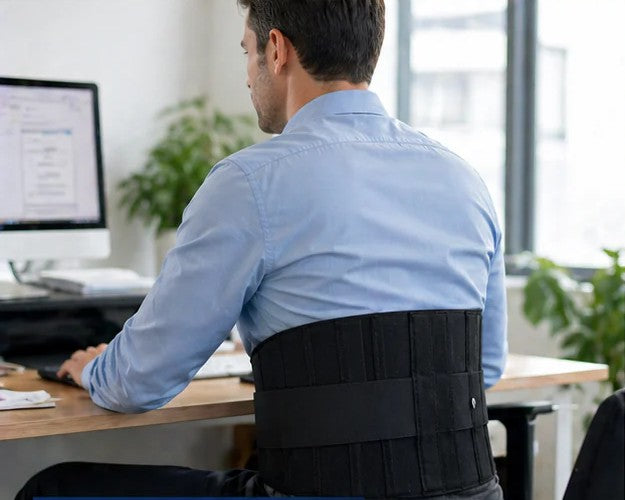
Why Lower Back Discomfort Keeps Coming Back and What Everyday Support Actually Helps
Lower back discomfort rarely starts with one dramatic moment.
More often, it builds quietly: long hours at a desk, carrying children, commuting, lifting groceries, standing all day, poor posture, inconsistent movement, or returning to exercise too quickly.
People often search for a quick fix but lower back comfort usually comes from something more practical: reducing unnecessary strain, improving movement habits, and supporting the body while it adapts.
That’s where lumbar support can play a useful role.
Understanding the Lower Back: Why It Gets Overworked So Easily
Your lower back (lumbar spine) is responsible for more than most people realize.
It helps:
-
Support upper body weight
-
Stabilize movement
-
Transfer force between the upper and lower body
-
Maintain posture while sitting and standing
-
Protect surrounding muscles and soft tissue
Because it works constantly, the lower back often compensates when other systems fall behind tight hips, weak core muscles, poor sitting habits, or repetitive movement patterns.
The result?
That familiar feeling of:
-
stiffness after sitting too long
-
fatigue at the end of the day
-
tension while standing
-
discomfort during bending or lifting
The Hidden Cost of “Just Push Through It”
Many people respond to lower back discomfort in one of two ways:
Ignore it and continue normal habits.
Stop moving altogether.
Neither tends to help long term.
Ignoring strain allows movement patterns to continue.
Avoiding movement completely can reduce confidence and physical conditioning.
A more balanced approach is often better:
-
Continue normal activity when appropriate
-
Improve posture awareness
-
Build strength gradually
-
Reduce excessive load where possible
-
Use supportive tools strategically not permanently
What a Lumbar Support Belt Actually Does (And What It Doesn’t)
A common misconception is that lumbar belts are meant to “fix” back problems.
They’re not.
A lumbar support belt is better understood as a supportive layer that helps manage mechanical stress during daily activities.
It may help by:
1. Creating Gentle Compression
Compression can create a feeling of support around the lower back and waist.
2. Improving Body Awareness
Sometimes posture improves simply because people become more aware of how they’re sitting, standing, or moving.
3. Supporting During Higher-Demand Activities
Activities like long work shifts, driving, household chores, or returning to exercise may feel more manageable with additional support.
4. Encouraging More Comfortable Movement
People are often more likely to move consistently when they feel supported.
When Support Makes Sense and When It Doesn’t
Support tools tend to work best during situations like:
✓ Long periods of sitting
✓ Standing-heavy workdays
✓ Light physical activity
✓ Travel and commuting
✓ Everyday lifting tasks
✓ Temporary periods of recovery and adjustment
Support alone is usually not enough if the bigger issues remain:
✕ No movement throughout the day
✕ Poor workstation setup
✕ Weak core and hip strength
✕ Repetitive overload habits
The goal isn’t dependency.
The goal is making better habits easier to maintain.
What to Look for in a Good Lumbar Support Belt
Not all support belts feel the same.
A practical lumbar support option should ideally offer:
-
Adjustable compression instead of rigid restriction
-
Comfortable daily wear
-
Flexibility during movement
-
Secure fit without excessive pressure
-
Breathable materials for longer use
Products like the Elastic Lumbar Support Belt from LabMedUSA are designed around this everyday-support approach, providing adjustable lumbar support while allowing natural movement rather than immobilization.
That distinction matters.
Because real life doesn’t happen standing perfectly still.
Support Is Most Effective When Combined With These 5 Habits
Move every 30–60 minutes
Small movement breaks matter more than one perfect workout.
Strengthen the core gradually
Your back works with your abdominal and hip muscles.
Rethink sitting posture
Aim for comfort and variation instead of forcing rigid posture.
Use smart lifting mechanics
Keep loads closer to the body.
Use support intentionally
Think of lumbar support as a helpful tool not the entire strategy.
Final Thought
Lower back discomfort isn’t always a sign that something dramatic is wrong.
Often, it’s your body asking for better load management, smarter movement, and a little more support during the moments that create the most strain.
The right habits create long-term change.
The right support can help make those habits easier to sustain.



Leave a comment