



Heat Stroke: Symptoms, Causes, First Aid, Prevention & When to Seek Emergency Help
Heat Stroke: What It Is, Warning Signs, First Aid & How to Stay Safe During a Heatwave
As temperatures continue to rise around the world, heat stroke has become an increasingly common medical emergency. Whether you're working outdoors, exercising in the sun, or simply spending time outside during a heatwave, understanding the signs of heat stroke could save a life.
Unlike mild heat-related illnesses, heat stroke is a life-threatening condition that requires immediate medical attention. Without prompt treatment, it can lead to permanent organ damage, brain injury, or even death.
What Is Heat Stroke?
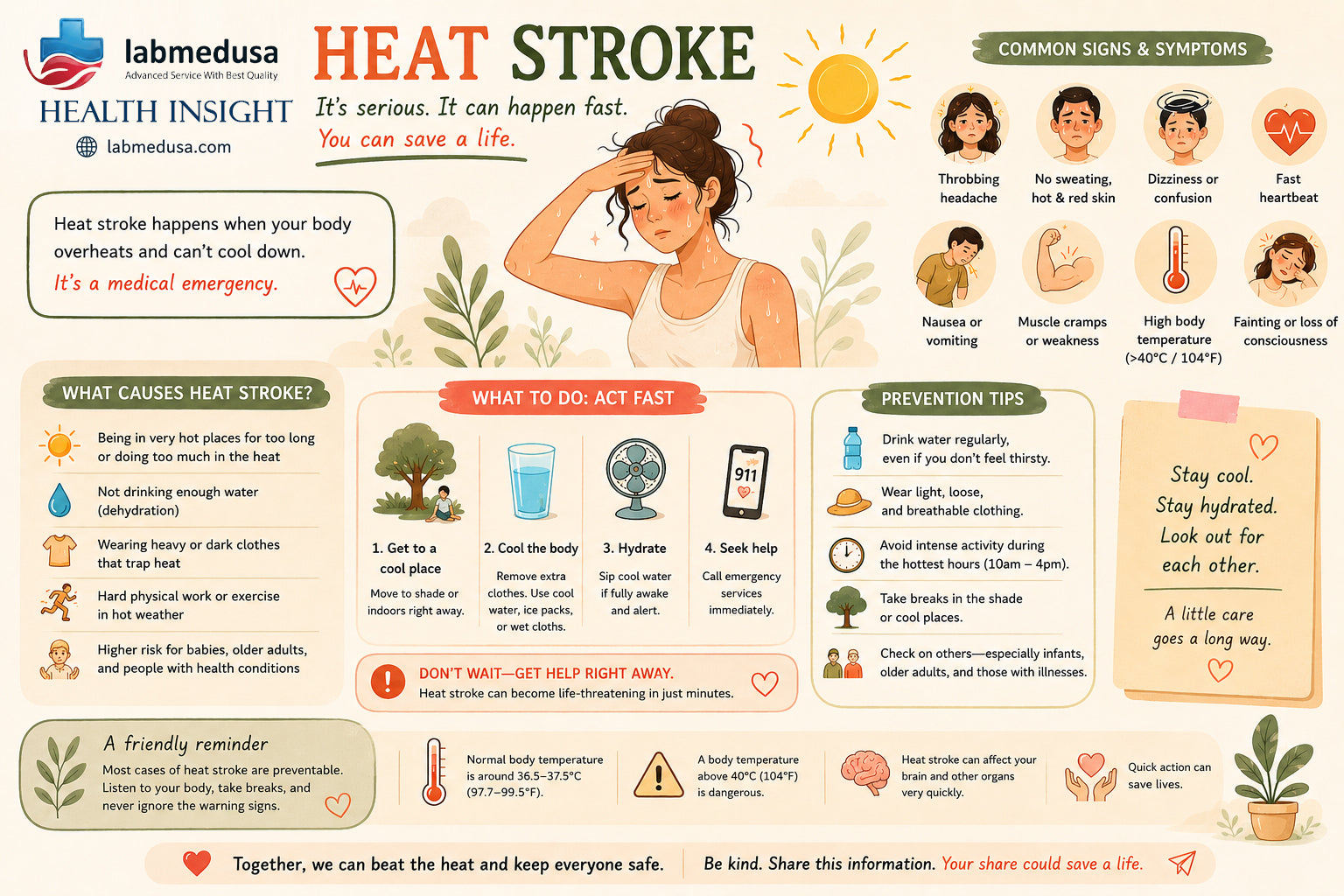
Heat stroke occurs when the body's cooling system can no longer regulate its temperature. As the body's core temperature rises above 40°C (104°F), the brain and vital organs begin to malfunction.
Normally, your body cools itself by sweating. During extreme heat or strenuous physical activity, this cooling system may become overwhelmed, causing body temperature to rise rapidly.
Heat stroke is a medical emergency and should never be ignored.
Heat Stroke vs. Heat Exhaustion
Many people confuse heat exhaustion with heat stroke, but they are not the same.
| Heat Exhaustion | Heat Stroke |
|---|---|
| Heavy sweating | Little or no sweating (may still sweat during exertion) |
| Cool, moist skin | Hot, dry, or flushed skin |
| Dizziness | Confusion |
| Weakness | Loss of consciousness |
| Nausea | Seizures may occur |
| Body temperature usually below 40°C (104°F) | Body temperature above 40°C (104°F) |
Heat exhaustion can quickly progress into heat stroke if left untreated.
Symptoms of Heat Stroke
Knowing the warning signs can help you act quickly.
Common symptoms include:
- 🌡️ Body temperature above 40°C (104°F)
- 🔥 Hot, flushed skin
- 😵 Confusion or unusual behavior
- 🤕 Severe headache
- 💓 Rapid heartbeat
- 😮 Rapid breathing
- 🤢 Nausea or vomiting
- 💫 Dizziness
- 🚶 Difficulty walking
- ❌ Loss of consciousness
- ⚡ Seizures (in severe cases)
If someone develops these symptoms after exposure to heat, call emergency medical services immediately.
What Causes Heat Stroke?
Heat stroke can happen when the body generates more heat than it can release.
Common causes include:
- Prolonged exposure to high temperatures
- Heatwaves
- Outdoor work under direct sunlight
- Intense exercise during hot weather
- Dehydration
- Wearing heavy or non-breathable clothing
- Poor ventilation
- Staying inside hot vehicles
Who Is Most at Risk?
Anyone can develop heat stroke, but some people are more vulnerable.
High-risk groups include:
- Older adults
- Infants and young children
- Outdoor workers
- Athletes
- Construction workers
- People with heart disease
- Individuals with diabetes
- People taking medications that affect sweating
- Individuals with obesity
- People who are dehydrated
Heat Stroke First Aid
If you suspect heat stroke:
1. Call emergency medical services immediately.
Heat stroke requires urgent medical treatment.
2. Move the person to a cool place.
Find shade or an air-conditioned room.
3. Remove excess clothing.
Allow heat to escape from the body.
4. Cool the body rapidly.
Use:
- Cold, wet towels
- Ice packs on the neck, armpits, and groin
- Cool water spray
- Fans if available
5. Monitor breathing and consciousness.
Be prepared to perform CPR if necessary and only if trained.
Do NOT:
- Force an unconscious person to drink water.
- Give alcohol or caffeinated beverages.
- Delay seeking emergency care.
How to Prevent Heat Stroke
Most cases are preventable.
Stay Hydrated
Drink water regularly even before you feel thirsty.
Avoid Peak Heat
Limit outdoor activities between 10 AM and 4 PM when temperatures are highest.
Wear Appropriate Clothing
Choose:
- Light-colored clothing
- Loose-fitting fabrics
- Breathable materials
Rest Frequently
Take breaks in shaded or air-conditioned areas.
Never Leave Anyone in a Parked Vehicle
Temperatures inside a car can become deadly within minutes.
Watch for Early Symptoms
Stop physical activity immediately if you experience dizziness, weakness, or nausea.
When Should You Seek Emergency Help?
Call emergency services immediately if someone has:
- Body temperature above 40°C (104°F)
- Confusion
- Difficulty speaking
- Seizures
- Loss of consciousness
- Trouble breathing
Every minute matters.
Frequently Asked Questions
Can heat stroke happen indoors?
Yes. Heat stroke can occur indoors without proper ventilation or air conditioning during extreme heat.
Can you recover from heat stroke?
Yes, but only with immediate treatment. Delayed treatment increases the risk of permanent brain, heart, kidney, and muscle damage.
Is heat stroke fatal?
It can be. Heat stroke is a life-threatening medical emergency if not treated quickly.
Can drinking water prevent heat stroke?
Staying hydrated helps reduce the risk, but it does not completely prevent heat stroke. Avoiding excessive heat and taking regular cooling breaks are also essential.
Key Takeaways
✅ Heat stroke is a medical emergency.
✅ Body temperature above 40°C (104°F) is a major warning sign.
✅ Confusion, loss of consciousness, seizures, and hot skin require immediate medical attention.
✅ Cool the person quickly while waiting for emergency responders.
✅ Stay hydrated, avoid prolonged sun exposure, and take regular breaks during hot weather.
Heat stroke is one of the most serious heat-related illnesses, but it is also one of the most preventable. By recognizing the warning signs early, staying hydrated, and avoiding prolonged exposure to extreme heat, you can protect yourself and those around you.
During every heatwave, remember to check on family members, friends, neighbors, older adults, and young children. A simple reminder to drink water or rest in the shade may help prevent a medical emergency.
We believe that sharing trusted health information empowers communities to stay healthier and safer. If you found this guide helpful, consider sharing it with others, it could make a life-saving difference.
LabMedUSA, Medical and Laboratory Equipment Supplier in California, USA



Leave a comment