



Stethoscopes Explained: A Complete Guide to Choosing the Right Stethoscope for Clinical Use
Stethoscopes are one of the most recognizable and essential medical tools in healthcare. From hospitals and clinics to EMS, nursing school, veterinary care, and home health, a reliable stethoscope supports accurate assessment and patient care every day. Understanding how a stethoscope works, what features matter most, and how to choose the right model can help healthcare professionals make a smarter purchase and improve daily workflow.
What Is a Stethoscope?
A stethoscope is a medical device used to listen to internal body sounds, a process known as auscultation. Healthcare professionals use stethoscopes to assess heart sounds, lung sounds, bowel sounds, and blood flow. A good stethoscope helps improve sound clarity, comfort, and efficiency during patient examinations.
Today’s stethoscopes are designed for a wide range of clinical environments. Whether you are a doctor, nurse, student, paramedic, or veterinarian, choosing the right stethoscope can make a noticeable difference in performance and convenience.
How a Stethoscope Works
A stethoscope collects sound through the chestpiece and transmits it through the tubing to the earpieces. The better the design, the clearer the sound quality and the more comfortable the listening experience.
A standard dual-head stethoscope usually includes two sides:
Bell:
The bell is commonly used for low-frequency sounds. It can be helpful when listening for subtle heart sounds or certain murmurs.
Diaphragm:
The diaphragm is used to hear higher-frequency sounds such as normal heartbeats, lung sounds, and many bowel sounds.
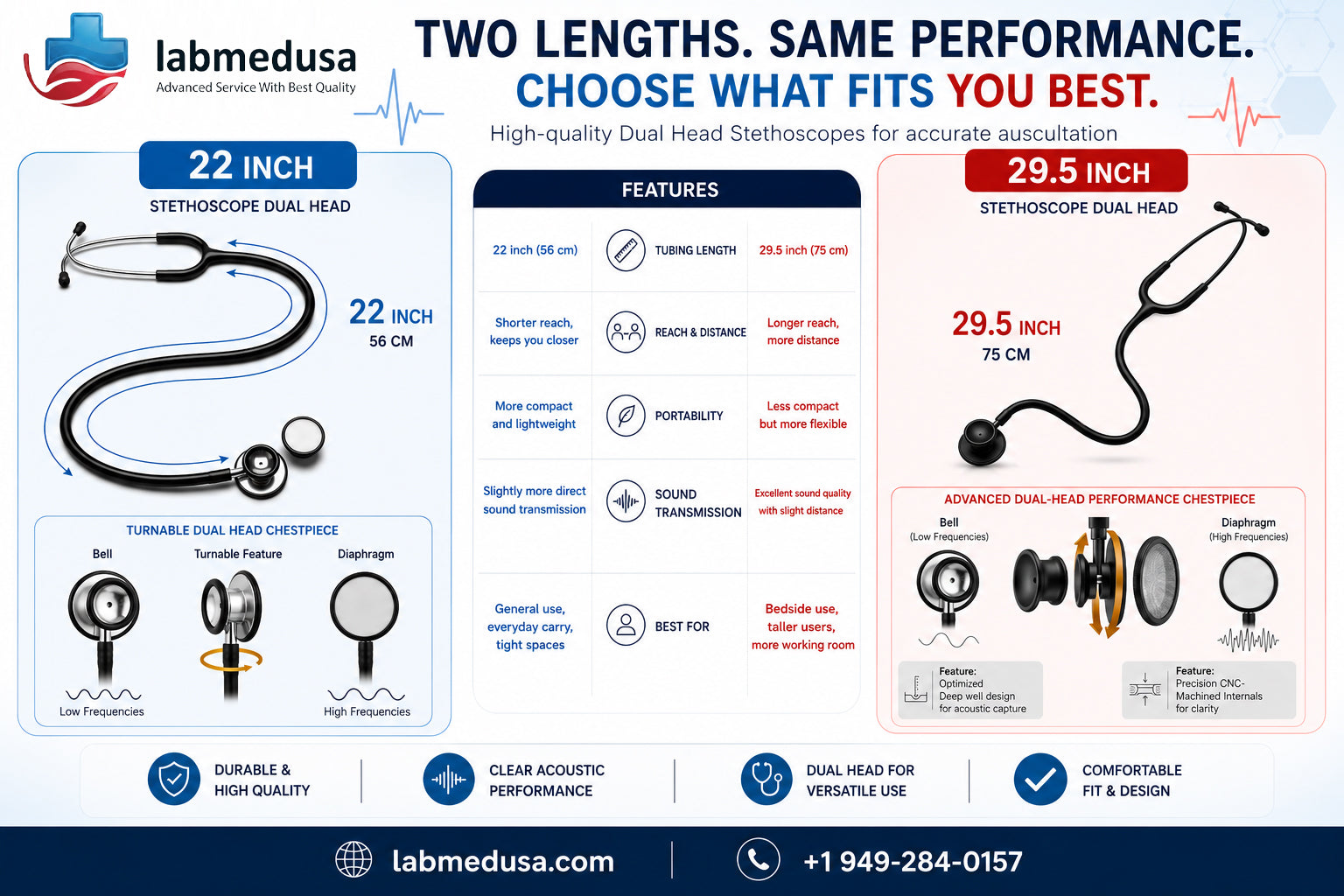
Many modern models feature a turnable chestpiece, allowing the user to switch between bell and diaphragm quickly and efficiently.
Why Stethoscope Quality Matters
Not all stethoscopes are built the same. A high-quality stethoscope should offer:
- Clear acoustic performance
- Comfortable eartips
- Durable tubing
- A secure chestpiece
- Easy handling during long shifts
- Reliable sound transmission
For healthcare professionals who use a stethoscope all day, comfort and clarity are just as important as durability. A well-designed model can support better patient assessments and reduce strain during repeated use.
Stethoscope Tubing Length: What Is the Difference?
Tubing length is one of the most important features to consider when choosing a stethoscope. Two common lengths are 22 inches and 29.5 inches.
22-inch stethoscope
A 22-inch stethoscope is more compact and lightweight. It is often preferred by users who want a shorter, more direct feel. It can be a good option for:
- Everyday clinical use
- Nursing students
- Tight working spaces
- Users who prefer a compact design
- Professionals who want easy portability
29.5-inch stethoscope
A 29.5-inch stethoscope provides extra reach and flexibility. It may be more comfortable for:
- Bedside examinations
- Taller healthcare professionals
- Users who want more working distance
- Busy clinical settings where extra mobility helps
Both options can provide strong performance. The right choice depends on personal comfort, workspace needs, and how the stethoscope will be used during the day.
Bell vs. Diaphragm: When Should You Use Each One?
Understanding the dual-head chest piece helps users get the most out of their stethoscope.
Use the bell for:
- Low-frequency sounds
- Subtle heart tones
- More delicate auscultation needs
Use the diaphragm for:
- High-frequency sounds
- Lung assessment
- Normal heart and bowel sounds
Healthcare professionals often rotate between both sides depending on the patient and the type of assessment. That is why dual-head stethoscopes remain a trusted choice across many medical fields.
Who Uses Stethoscopes?
Stethoscopes are used by a wide range of professionals, including:
- Physicians
- Nurses
- Nurse practitioners
- Physician assistants
- EMTs and paramedics
- Medical students
- Veterinary professionals
- Home care providers
Because each setting is different, choosing the best stethoscope often comes down to balancing portability, acoustic clarity, comfort, and chestpiece design.
How to Choose the Best Stethoscope
When shopping for a stethoscope, keep these factors in mind:
- Sound quality
Look for a model that offers clear acoustic performance for accurate auscultation. - Chestpiece design
A dual-head chestpiece gives you more versatility for different sound frequencies. - Tube length
Choose shorter tubing for a compact feel or longer tubing for extra reach and comfort. - Comfort
Soft eartips, lightweight design, and flexible tubing can improve all-day use. - Durability
A strong stethoscope should hold up to daily clinical use in demanding environments. - Intended use
A student, bedside nurse, EMT, or veterinarian may each benefit from slightly different features.
Caring for Your Stethoscope
A stethoscope can last longer and perform better when properly maintained. Clean the chestpiece and tubing regularly, avoid unnecessary bending, and store it in a safe place when not in use. Keeping the device clean is especially important in healthcare settings where hygiene and infection control matter.
A stethoscope is more than just a medical accessory. It is a vital diagnostic tool that supports patient care, clinical confidence, and professional efficiency. Whether you prefer a 22-inch stethoscope for compact convenience or a 29.5-inch stethoscope for added reach, selecting the right model can improve both comfort and performance.
At LabMedUSA, stethoscopes are designed with practical use in mind, helping healthcare professionals choose reliable tools for everyday clinical needs.
Medical Equipment Supplier in California, USA



Leave a comment