



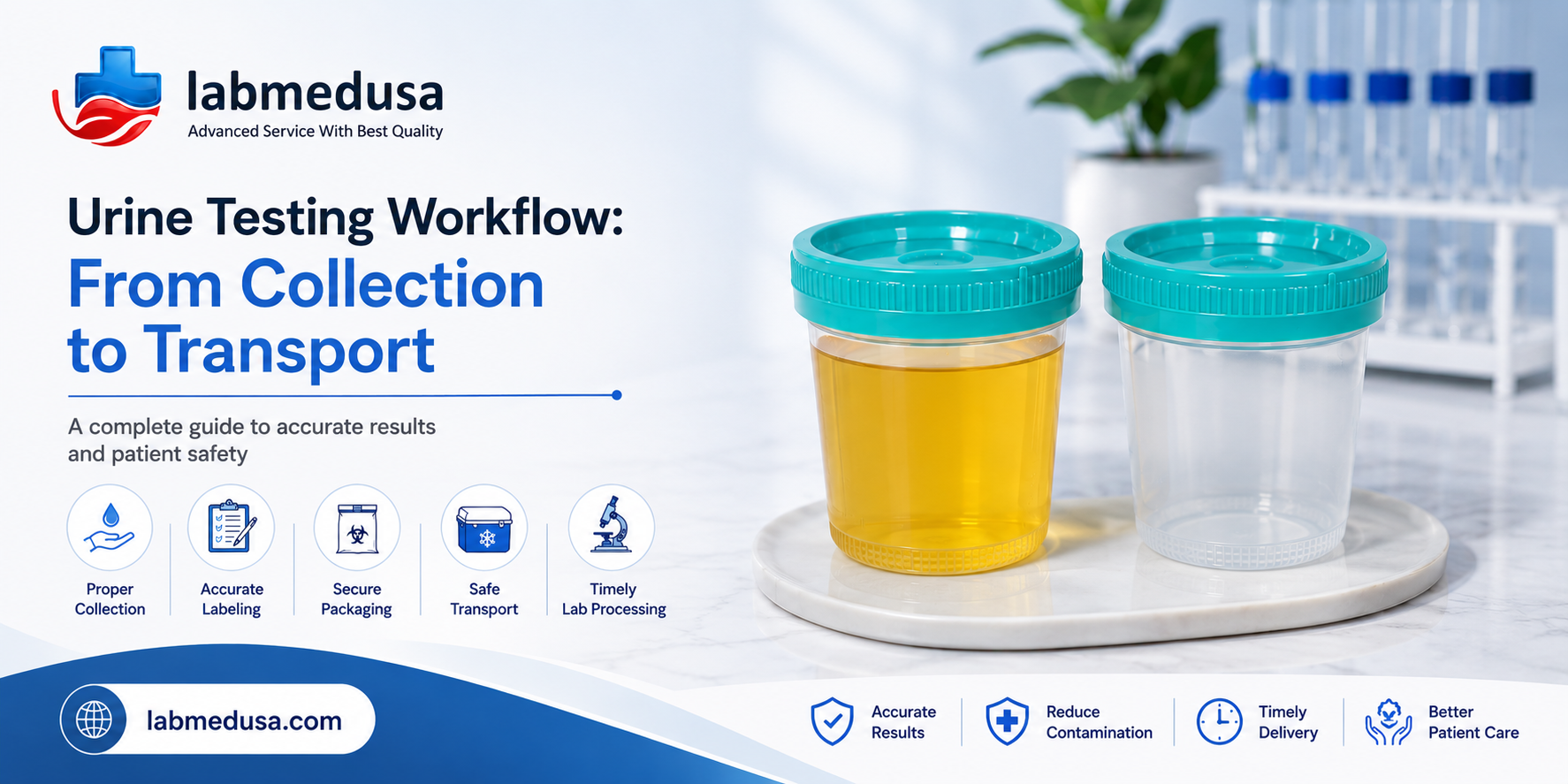
Urine Testing Workflow: From Collection to Transport
Urine testing is one of the most commonly performed diagnostic procedures in healthcare. Whether for routine health screening, kidney function assessment, urinary tract infection diagnosis, pregnancy testing, or drug screening, the accuracy of laboratory results begins long before the specimen reaches the analyzer.
The urine testing workflow involves multiple critical steps from proper specimen collection to secure transportation. Even minor mistakes during the pre-analytical phase can compromise specimen integrity, resulting in inaccurate results, delayed diagnoses, or the need for repeat testing.
This guide explains each stage of the urine testing workflow and highlights best practices that help healthcare professionals maintain specimen quality throughout the process.
Why the Urine Testing Workflow Matters
Approximately 60–70% of laboratory errors occur during the pre-analytical phase, making proper specimen handling essential for patient safety and diagnostic accuracy.
A standardized workflow helps healthcare facilities:
- Improve diagnostic accuracy
- Reduce specimen rejection rates
- Prevent contamination
- Preserve sample integrity
- Minimize repeat collections
- Improve laboratory efficiency
- Deliver faster turnaround times
Following standardized procedures ensures every urine sample accurately reflects the patient's condition.
Step 1: Patient Preparation
Proper preparation begins before specimen collection.
Healthcare providers should:
- Verify patient identity using at least two identifiers
- Explain the collection procedure clearly
- Determine the appropriate specimen type
- Provide sterile collection containers
- Instruct patients on hand hygiene and cleansing procedures
Different laboratory tests require different specimen types, including:
- Random urine
- First morning urine
- Midstream clean-catch urine
- Timed urine collection
- 24-hour urine collection
Choosing the correct collection method is the first step toward obtaining reliable laboratory results.
Step 2: Urine Specimen Collection
Correct specimen collection minimizes contamination and preserves diagnostic accuracy.
For routine urinalysis, the midstream clean-catch method is recommended.
General collection procedure:
- Wash hands thoroughly.
- Clean the urethral area.
- Begin urinating.
- Collect the midstream urine in a sterile container.
- Securely close the lid immediately.
Avoid touching the inside of the container or lid to reduce contamination.
Proper collection helps maintain the quality of urine for:
- Chemical analysis
- Microscopic examination
- Microbiology culture
- Molecular testing
Step 3: Specimen Labeling
Correct labeling is one of the most important parts of specimen handling.
Each specimen should be labeled immediately after collection with:
- Patient's full name
- Medical record or identification number
- Date of collection
- Time of collection
- Collector's initials (if required)
Mislabeling remains one of the leading causes of specimen rejection in clinical laboratories.
Labels should always match the laboratory request form and electronic medical record.
Step 4: Specimen Preservation
Urine begins to change soon after collection.
Without proper preservation:
- Bacteria multiply rapidly.
- pH changes.
- Glucose levels decrease.
- Cells deteriorate.
- Casts disintegrate.
- Crystals may form.
Whenever immediate transport is not possible, specimens should be stored according to laboratory protocols.
Depending on the requested test, preservation may involve:
- Refrigeration
- Chemical preservatives
- Temperature-controlled storage
Maintaining specimen stability preserves laboratory sample integrity.
Step 5: Packaging the Specimen
Safe packaging protects both healthcare workers and specimen quality.
Every urine specimen should be placed inside leak-resistant transport bags.
Proper packaging includes:
- Securely closed urine container
- Leak-proof secondary packaging
- Absorbent material (when required)
- Laboratory request form stored separately
- Biohazard labeling according to regulations
Correct packaging reduces spills, contamination, and transportation damage.
Step 6: Urine Sample Transport
Transportation is one of the most critical stages in the urine testing workflow.
Specimens should reach the laboratory as quickly as possible.
During transport:
- Avoid excessive shaking.
- Protect specimens from heat.
- Maintain appropriate temperatures.
- Prevent prolonged delays.
- Follow laboratory transport guidelines.
Timely transportation preserves chemical, microbiological, and microscopic characteristics of the specimen.
Common Errors During Urine Testing Workflow
Common pre-analytical errors include:
- Improper patient identification
- Contaminated collection technique
- Incorrect specimen container
- Delayed transportation
- Improper storage temperature
- Missing labels
- Leaking containers
- Incomplete documentation
Most of these issues are preventable through standardized operating procedures and staff training.
Best Practices for Urine Specimen Handling
Healthcare facilities can improve laboratory quality by following these best practices:
- Use sterile specimen containers.
- Educate patients before collection.
- Label specimens immediately.
- Minimize transportation time.
- Store specimens appropriately.
- Use leak-proof transport bags.
- Follow laboratory-specific guidelines.
- Monitor specimen rejection rates.
These practices improve workflow efficiency while maintaining specimen integrity.
Benefits of a Standardized Urine Testing Workflow
An effective urine testing workflow offers numerous benefits:
- Improved patient safety
- Higher diagnostic accuracy
- Reduced laboratory errors
- Faster turnaround time
- Better specimen quality
- Increased laboratory efficiency
- Compliance with quality standards
Healthcare organizations that implement standardized specimen handling procedures experience fewer rejected samples and more reliable laboratory outcomes.
Conclusion
The journey of a urine specimen begins at collection and continues through labeling, preservation, packaging, and transportation before laboratory analysis even starts. Every step plays a vital role in ensuring accurate diagnostic results.
By following a standardized urine testing workflow, healthcare professionals can reduce pre-analytical errors, preserve specimen integrity, and support better patient care.
At LabMedUSA, we understand that quality laboratory testing begins with proper specimen handling. Reliable urine collection containers and standardized laboratory practices help ensure every sample reaches the laboratory in optimal condition for accurate analysis.
Frequently Asked Questions (FAQs)
What is the urine testing workflow?
- The urine testing workflow includes patient preparation, specimen collection, labeling, preservation, packaging, transportation, laboratory processing, and reporting.
Why is urine sample transport important?
- Proper transportation prevents contamination, preserves specimen integrity, and ensures accurate laboratory results.
What is the most common urine collection method?
- The midstream clean-catch technique is the most commonly recommended method for routine urinalysis because it minimizes contamination.
Why are urine specimens rejected?
- Common reasons include incorrect labeling, contamination, leakage, delayed transport, improper storage, and insufficient specimen volume.
How can laboratories reduce urine specimen errors?
- Laboratories can reduce errors through standardized procedures, staff training, proper labeling, timely transportation, and quality control measures.



Leave a comment