



Why Does My Pet Hate the Carrier?
There’s a moment many pet parents know all too well.
You quietly take the carrier out of storage.
Your cat who seemed deeply asleep just seconds ago suddenly becomes incredibly alert and disappears under the bed.
Your dog starts following you with suspicious eyes, slowly backing away as if they already know what’s coming.
And somehow, a simple moment turns into stress for everyone.
If you’ve ever thought:
“My pet hates traveling.”
“My pet gets anxious in carriers.”
“Why does this feel harder than it should?”
You’re not alone.
But here’s something many of us don’t realize at first:
Sometimes our pets aren’t afraid of going somewhere.
They’re afraid of the experience of being put inside the carrier.
The carrier isn’t always the problem, it’s what it represents
For many pets, carriers only appear before things they don’t enjoy:
-
Vet appointments
-
Loud environments
-
Being separated from home
-
Long car rides
-
New places and unfamiliar smells
So over time, the carrier itself becomes part of the stressful memory.
Imagine if every time you saw a suitcase, it meant discomfort, confusion, and losing control.
You’d probably avoid it too.
That’s why helping pets feel comfortable starts long before travel day.
It starts with changing the meaning of the carrier.
Step 1: Stop treating the carrier like an “event object”
One of the biggest mistakes many of us make?
Keeping the carrier hidden away.
Then suddenly pulling it out only when it’s time to leave.
To your pet, that object becomes a warning sign.
Instead:
Leave the carrier out in your living space.
No pressure.
No destination.
No expectations.
Let them walk past it.
Sniff it.
Ignore it.
Curiosity is the first step toward comfort.
You’ll be surprised how many pets eventually choose to investigate on their own.
Step 2: Make it smell like safety, not travel
Pets experience the world through scent more than we realize.
An unfamiliar carrier can feel cold and strange.
Try adding:
🧸 Their favorite blanket
🧸 A toy they already love
🧸 A soft shirt that smells like you
🧸 Their usual bed liner
The goal isn’t to make the carrier exciting.
It’s to make it familiar.
Step 3: Reward curiosity not forced bravery
A common reaction when pets resist is trying to place them inside quickly.
But comfort grows better through small positive moments.
Try this instead:
Day 1 → Treat near the carrier
Day 2 → Treat at the entrance
Day 3 → Treat for stepping inside
Day 4 → Sit together nearby
Tiny wins count.
Your pet doesn’t need to “conquer” the carrier in one day.
Trust builds in repetitions.
Step 4: Think about how the carrier feels from their perspective
This changed our perspective completely.
As humans, we often choose carriers based on convenience.
But pets experience something different:
“Can I breathe comfortably?”
“Can I see what’s happening?”
“Do I feel trapped?”
“Can I settle into a position naturally?”
Details that seem small to us can feel huge to them.
That’s why features that support comfort matter more than we initially thought.
Things like:
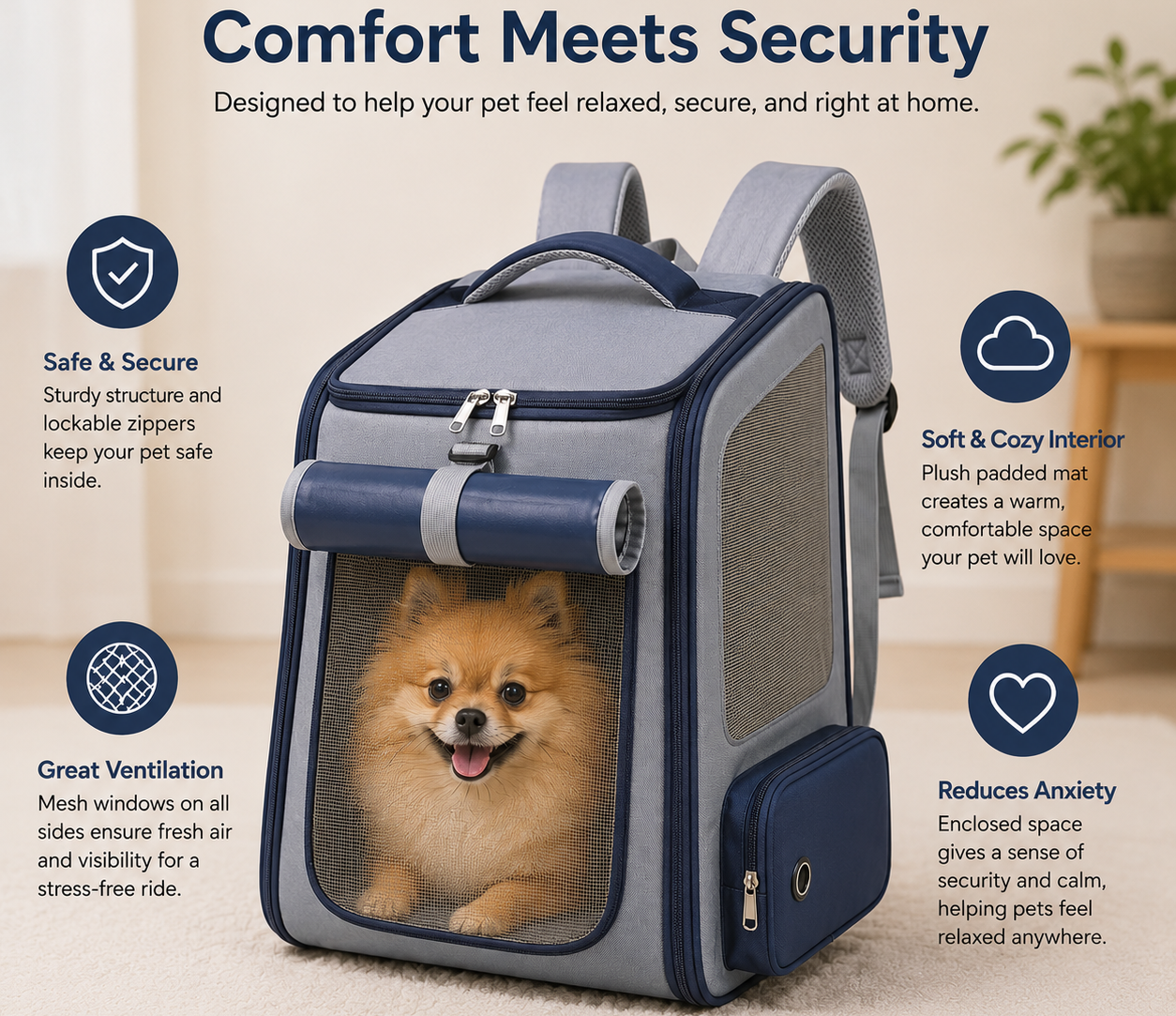
🌿 Breathable airflow instead of feeling enclosed
☀️ Protection from harsh sun during outdoor walks
🐾 Easy entry so they don’t feel forced inside awkwardly
🎒 Enough structure to feel secure, while still feeling cozy
We noticed that when a carrier feels more open and less restrictive, pets often spend less energy resisting and more energy adjusting.
Step 5: Practice “fake trips”
This one surprised us.
Before real outings:
Put your pet inside for 1–2 minutes.
Walk around the house.
Sit down.
Open it again.
No destination.
No vet.
No stress.
This teaches them:
Carrier ≠ something scary always happens.
Over time, travel becomes less of an emotional event.
A gentle reminder for pet parents
If your pet still resists…
You’re not failing.
And your pet isn’t being difficult.
Some pets adapt quickly.
Some need weeks.
Some will always prefer home.
That’s okay.
Comfort isn’t about making them love the carrier.
It’s about helping them feel safe enough to trust you inside it.
And sometimes, the biggest sign of success isn’t excitement.
It’s seeing them sit quietly.
Relax their shoulders.
Peek outside.
Or even fall asleep.
Those little moments mean more than we think.
Because at the end of the day, our pets don’t care whether the trip is aesthetic, convenient, or Instagram-worthy.
They care about one thing:
Feeling safe while they’re with us 💛



Leave a comment