



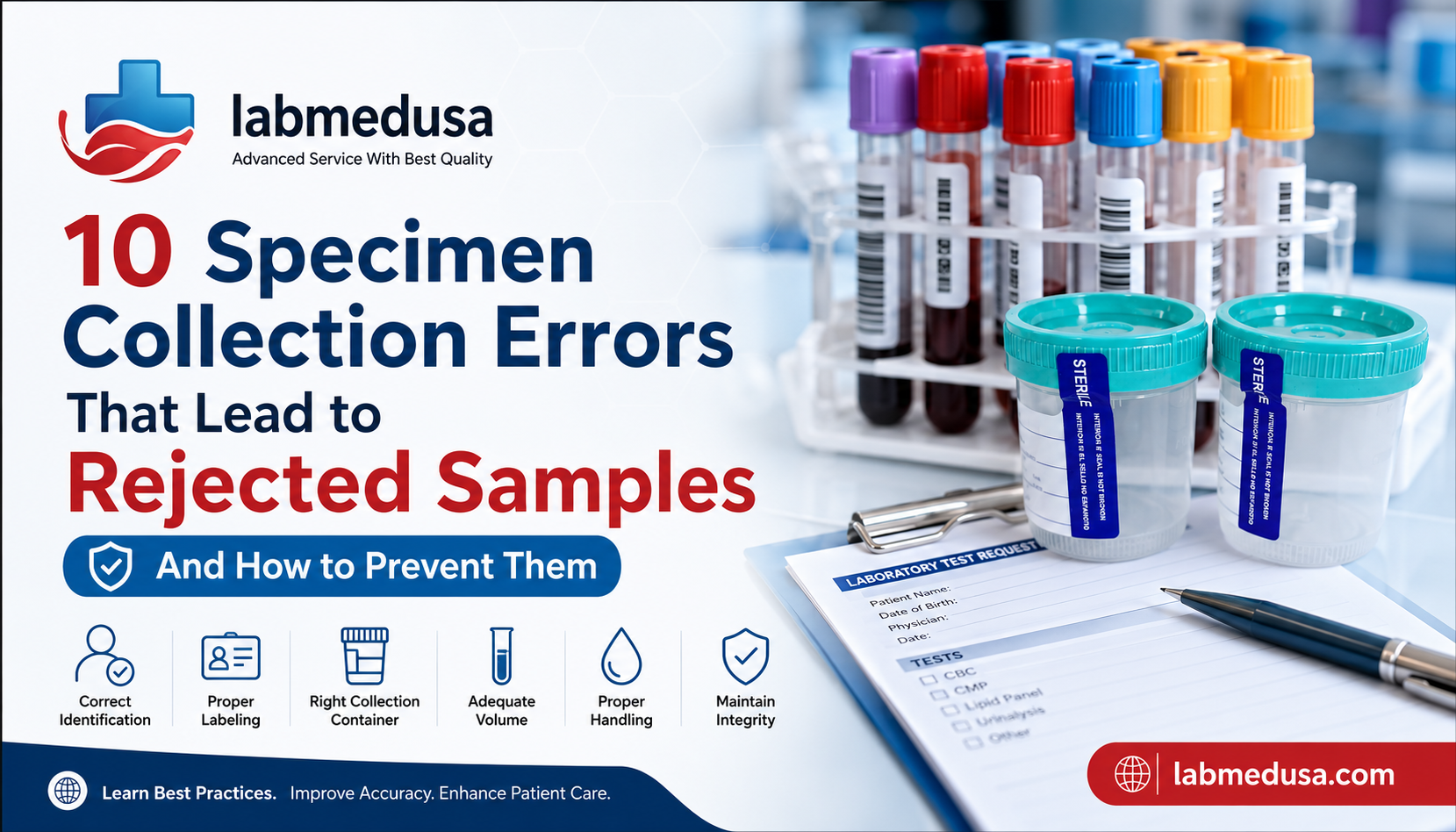
10 Specimen Collection Errors That Lead to Rejected Samples (And How to Prevent Them)
Every specimen collected represents an important healthcare decision. Whether it's a blood sample, urine specimen, or diagnostic test collection, laboratories rely on specimen integrity to produce accurate results.
Unfortunately, specimen rejection remains one of the most common and costly challenges in healthcare. A rejected sample can delay diagnosis, increase operational costs, require patients to return for recollection, and negatively impact overall patient satisfaction.
The majority of laboratory testing errors occur during the pre-analytical phase, which includes specimen collection, labeling, handling, storage, and transportation. The good news is that most specimen collection errors are preventable.
In this guide, we'll cover the 10 most common specimen collection mistakes that lead to rejected samples and explain how healthcare facilities, mobile phlebotomy providers, and laboratories can reduce rejection rates while improving specimen quality.
Why Specimen Rejection Matters
When a specimen is rejected, the consequences go far beyond inconvenience.
Sample rejection can result in:
-
Delayed patient care
-
Additional collection costs
-
Increased workload for staff
-
Reduced laboratory efficiency
-
Poor patient experience
-
Wasted specimen collection supplies
-
Potential treatment delays
By implementing proper collection procedures and using high-quality specimen collection supplies, healthcare organizations can significantly reduce rejection rates and improve patient outcomes.
1. Incorrect Patient Identification
Before a specimen is collected, healthcare professionals must verify that they are collecting from the correct patient.
Patient identification errors can lead to serious consequences, including inaccurate diagnoses and inappropriate treatment decisions.
Best Practices
-
Verify at least two patient identifiers
-
Confirm patient name and date of birth
-
Follow facility identification protocols
-
Never rely solely on room numbers or verbal confirmation
Proper patient identification is the first step in maintaining specimen integrity.
2. Missing or Incorrect Specimen Labeling
One of the leading causes of laboratory specimen rejection is improper labeling.
Common labeling mistakes include:
-
Missing patient information
-
Incorrect patient information
-
Missing collection date or time
-
Illegible handwriting
-
Labels applied to the wrong container
Even a perfectly collected specimen may be rejected if it cannot be accurately identified.
How to Prevent Labeling Errors
-
Label specimens immediately after collection
-
Verify all patient information before transport
-
Use barcode systems whenever possible
-
Follow laboratory labeling requirements
Accurate labeling helps ensure specimens move through the testing process without unnecessary delays.
3. Using the Wrong Collection Container
Different laboratory tests require specific specimen containers designed to preserve sample quality and support accurate analysis.
Using the wrong collection container may result in:
-
Compromised specimens
-
Inaccurate test results
-
Laboratory rejection
-
Required recollection
Examples include:
-
Blood collection tubes with specific additives
Always verify laboratory requirements before specimen collection.
4. Insufficient Sample Volume
Quantity Not Sufficient (QNS) specimens are among the most common reasons for rejection.
Insufficient sample volume may occur when:
-
Blood tubes are underfilled
-
Urine specimens do not meet minimum volume requirements
-
Collection procedures are incomplete
Why Sample Volume Matters
Many laboratory analyzers require a minimum volume of specimen to perform testing accurately. When there isn't enough material available, the sample may be rejected.
Prevention Tips
-
Train staff on minimum specimen volume requirements
-
Follow collection guidelines carefully
-
Verify sample volume before submission
Adequate specimen volume helps prevent costly redraws and delays.
5. Hemolyzed Blood Samples
Hemolysis occurs when red blood cells rupture during collection or handling.
Hemolyzed blood specimens frequently interfere with laboratory testing and often require recollection.
Common Causes of Hemolysis
-
Poor venipuncture technique
-
Excessive suction during collection
-
Needles that are too small
-
Improper specimen handling
-
Rough transportation conditions
Prevention Strategies
-
Follow proper blood collection procedures
-
Handle specimens carefully
-
Train phlebotomy staff regularly
Reducing hemolysis improves laboratory efficiency and patient satisfaction.
6. Improper Mixing of Blood Collection Tubes
Many blood collection tubes contain additives that must be properly mixed immediately after collection.
Failure to mix correctly may result in:
-
Clotted specimens
-
Inaccurate results
-
Rejected samples
Best Practices
-
Follow manufacturer recommendations
-
Gently invert tubes after collection
-
Avoid vigorous shaking
-
Train staff on proper collection protocols
Correct specimen handling helps preserve sample quality and ensures reliable testing.
7. Specimen Contamination
Contaminated specimens can lead to inaccurate results and laboratory rejection.
Sources of contamination may include:
-
Poor aseptic technique
-
Touching sterile collection surfaces
-
Environmental exposure
-
Improper handling procedures
How to Prevent Contamination
-
Use sterile specimen collection supplies
-
Follow infection control protocols
-
Practice proper hand hygiene
-
Maintain clean collection environments
Contamination prevention is especially important for urine collection, microbiology testing, and diagnostic cultures.
8. Delayed Specimen Transport
Even properly collected specimens can become compromised if transportation to the laboratory is delayed.
Many specimen types have strict stability requirements that must be maintained from collection through testing.
Risks of Delayed Transport
-
Sample degradation
-
Altered test results
-
Increased rejection rates
-
Longer turnaround times
Protect Specimens During Transport with Cooler Bags
For mobile phlebotomists, clinics, physician offices, and occupational health providers, environmental conditions can significantly impact specimen quality.
During hot weather, temperatures inside vehicles can rise rapidly and expose specimens to conditions that may affect test accuracy.
Using an insulated specimen cooler bag can help:
-
Protect specimens from excessive heat
-
Maintain recommended transport temperatures
-
Preserve specimen integrity
-
Reduce temperature-related rejection rates
-
Improve laboratory compliance
A quality specimen cooler bag is one of the most effective investments for protecting temperature-sensitive specimens during transportation.
9. Improper Temperature Control
Temperature-sensitive specimens require proper storage and transportation conditions.
Exposure to extreme temperatures can compromise specimen quality before laboratory testing even begins.
Hot Weather Creates Serious Risks
Many healthcare professionals underestimate the impact of heat exposure during specimen transport.
Blood samples, urine specimens, and other biological materials can deteriorate when exposed to excessive temperatures.
Best Practices for Temperature-Sensitive Specimens
-
Avoid leaving specimens in parked vehicles
-
Follow laboratory temperature guidelines
-
Transport specimens promptly
-
Monitor storage conditions when required
Maintaining proper temperatures helps ensure accurate laboratory results and reduces the risk of specimen rejection.
10. Leaking or Damaged Specimen Containers
Leaking specimens present significant safety and quality concerns.
Most laboratories will automatically reject specimens that arrive leaking, damaged, or improperly packaged.
Common Causes
-
Cracked containers
-
Loose lids
-
Poor-quality collection supplies
-
Improper transport packaging
Prevention Tips
Choose high-quality specimen collection containers designed for healthcare and laboratory environments.
Look for:
-
Durable construction
-
Secure closures
-
Reliable transport compatibility
Using quality specimen containers helps protect both healthcare workers and specimen integrity.
Secure Specimen Storage Between Collection and Laboratory Pickup
In many clinics and collection facilities, specimens are not immediately transported to the laboratory after collection.
This creates an important challenge: how do you securely store specimens until they are picked up by laboratory personnel or courier services?
Why Use a Specimen Lockbox?
A specimen lockbox provides a secure and organized location for temporary specimen storage.
Benefits include:
-
Protects specimens from unauthorized access
-
Maintains chain of custody
-
Reduces the risk of lost samples
-
Improves specimen security
-
Supports compliance with laboratory procedures
Ideal Applications
Specimen lockboxes are particularly valuable for:
-
Mobile phlebotomy services
-
Physician offices
-
Occupational health clinics
-
Drug testing facilities
-
Urgent care centers
-
Long-term care facilities
Combining a secure specimen lockbox with proper transport procedures ensures specimens remain protected until laboratory pickup.
Best Practices for Reducing Specimen Rejection Rates
Reducing specimen rejection requires a comprehensive approach.
Healthcare organizations should focus on:
Staff Training
Regular education ensures consistent specimen collection practices across all personnel.
Standardized Procedures
Documented collection protocols reduce variability and improve compliance.
Quality Collection Supplies
Reliable specimen containers, transport bags, cooler bags, and storage solutions help maintain specimen integrity.
Secure Storage and Transportation
Using specimen lockboxes and insulated transport systems protects samples throughout the collection process.
Continuous Quality Improvement
Monitor rejection rates, identify trends, and address recurring issues before they impact patient care.
Final Thoughts
Specimen rejection remains a significant challenge for healthcare facilities, laboratories, and mobile phlebotomy providers. Fortunately, most specimen collection errors are preventable.
By focusing on proper patient identification, accurate labeling, correct specimen handling, temperature control, secure transport, and safe storage practices, organizations can dramatically reduce rejected samples and improve testing outcomes.
Investing in high-quality specimen collection supplies, insulated cooler bags, secure specimen lockboxes, and reliable transport solutions helps ensure specimens arrive at the laboratory safely, securely, and ready for accurate analysis.
At Lab Med USA, we provide specimen collection and transport solutions designed to help healthcare professionals protect specimen integrity from collection through laboratory processing.
Explore our selection of specimen containers, urine collection supplies, specimen transport bags, cooler bags, lockboxes, and laboratory essentials to help reduce specimen rejection and improve operational efficiency.
Frequently Asked Questions
What is the most common reason for specimen rejection?
Incorrect labeling, insufficient specimen volume, and hemolyzed blood samples are among the most common causes of specimen rejection.
How can hot weather affect specimen quality?
Excessive heat can degrade blood, urine, and other biological specimens. Using an insulated specimen cooler bag helps protect samples during transportation.
Why should clinics use a specimen lockbox?
A specimen lockbox helps maintain specimen security, chain of custody, and organized storage until laboratory pickup.
How can healthcare facilities reduce specimen rejection rates?
Facilities can reduce rejection rates through staff training, standardized collection procedures, quality specimen collection supplies, secure storage, and proper specimen transportation practices.
LabMedUSA, Laboratory and Medical Equipment Supplier in California, USA



Leave a comment