



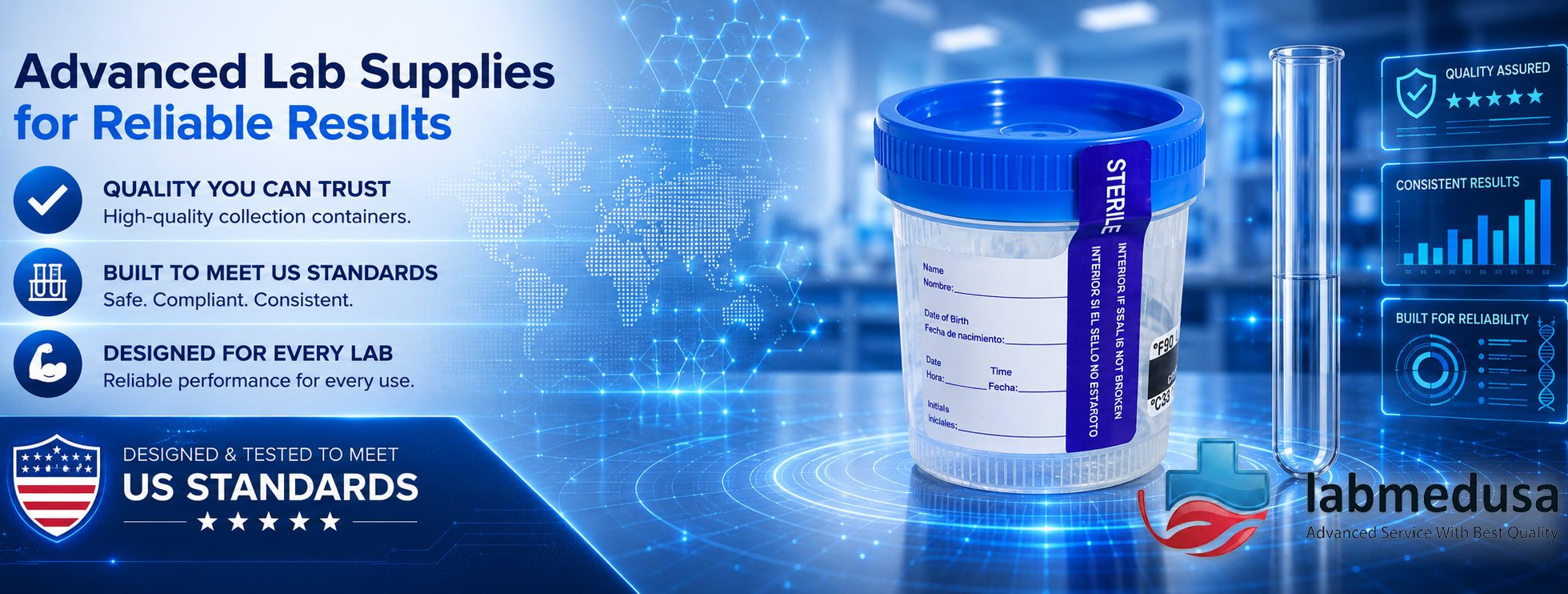
From Sample Collection to Analysis: How Modern Laboratories Reduce Contamination and Protect Specimen Integrity
Every laboratory result begins long before analysis starts.
Before instruments run, before data is reviewed, and before reports are delivered, the quality of the outcome depends on one thing: specimen integrity.
Even highly advanced laboratories can experience compromised results if contamination, poor transfer technique, inconsistent storage, or handling errors occur earlier in the workflow.
That’s why high-performing diagnostic, toxicology, research, and clinical laboratories increasingly focus on end-to-end specimen handling systems, not isolated testing steps.
In this guide, we’ll walk through practical ways to reduce contamination risk and improve consistency from sample collection through analysis, using standardized laboratory consumables and handling practices.
Why Specimen Integrity Matters More Than Ever
Specimen integrity refers to maintaining a sample in a condition that accurately reflects its original state throughout collection, transfer, storage, and testing.
When integrity is compromised, laboratories may encounter:
- Invalid or inconclusive test results
- Repeat testing and increased operating costs
- Delayed turnaround times
- Regulatory and documentation challenges
- Reduced confidence in laboratory outputs
In many workflows, the largest sources of variability happen before the sample ever reaches an analyzer.
That stage is often called the pre-analytical phase and it is where contamination prevention has the highest impact.
The Four Stages of a Contamination-Resistant Laboratory Workflow
1. Start With Controlled Sample Collection
Collection is the first and often most underestimated control point.
A collection system should help operators:
- Capture the correct volume
- Minimize environmental exposure
- Support secure transfer into downstream processing
Using standardized specimen containers reduces handling variation and supports repeatable procedures across technicians and locations.
Products commonly used in collection workflows include:
- Specimen cups
- Collection containers
- Graduated sample vessels
- Sterile collection formats
Explore collection options here:
LabMedUSA Specimen Collection Products
Best Practices During Collection
✓ Label before collection whenever protocol allows
✓ Avoid unnecessary container changes
✓ Maintain clean handling surfaces
✓ Standardize collection instructions across operators
2. Improve Precision During Liquid Transfer
Once collected, specimens are often transferred, aliquoted, diluted, or prepared.
This is where subtle differences in technique can create measurable variability.
Modern laboratories reduce transfer-related issues by focusing on:
Accurate Volume Control
Small deviations in volume can influence downstream performance and consistency.
Controlled Pipetting Technique
Good practices include:
- Vertical aspiration when required by protocol
- Consistent immersion depth
- Controlled dispensing speed
- Routine calibration verification
Selecting Appropriate Consumables
Laboratories often match transfer tools to expected sample volume and workflow throughput.
Examples include:
- Adjustable pipettors
- Precision transfer devices
- Disposable pipette tips
See example liquid handling solutions:
LabMedUSA Liquid Handling Products
3. Protect Samples During Storage and Transport
Collection quality can quickly deteriorate if storage conditions and transport procedures are inconsistent.
Transport systems should support:
- Secure closure
- Stable containment
- Reduced environmental exposure
- Traceable handling processes
Typical laboratory transport and storage components include:
- Screw-cap transport tubes
- PCR-compatible storage formats
- Short-term processing containers
Explore transport and storage options:
LabMedUSA Lab Equipment
Questions Every Lab Should Ask
- Is the container matched to intended storage duration?
- Are transfers minimized?
- Are closure systems standardized?
- Is chain-of-handling documented?
4. Standardize Processing Before Analysis
By the time specimens reach preparation and analysis, consistency becomes critical.
Standardization reduces operator-to-operator variability and supports more predictable workflows.
Common approaches include:
Use Consistent Tube Formats
Uniform dimensions and compatible materials simplify processing.
Reduce Workflow Complexity
Fewer container transitions often mean fewer opportunities for handling variation.
Build Repeatable SOPs
Strong standard operating procedures should define:
- Collection steps
- Transfer expectations
- Storage windows
- Processing order
Example laboratory processing supplies:
LabMedUSA Test Tube Solutions
Seven Practical Ways to Reduce Specimen Handling Errors
1. Standardize collection containers
Consistency reduces interpretation and handling differences.
2. Minimize manual transfers
Each transfer introduces additional risk.
3. Match tools to intended volume ranges
Avoid overextending equipment beyond design use.
4. Use documented handling procedures
Written processes improve reproducibility.
5. Organize storage zones clearly
Reduce mix-ups and retrieval delays.
6. Train for technique, not just equipment
Operator consistency matters.
7. Audit pre-analytical performance regularly
Measure errors before they affect outcomes.
The Future of Laboratory Quality Starts Before Testing
Laboratory excellence is rarely created by a single instrument.
It is built through repeatable collection, disciplined transfer practices, reliable storage, and standardized processing.
As testing volumes increase and expectations for quality continue to rise, laboratories that strengthen specimen integrity across the entire workflow position themselves for greater consistency and operational confidence.
If your team is evaluating ways to improve laboratory handling processes, explore the full range of collection, transport, and liquid handling solutions at:
LabMedUSA | Laboratory Equipment Supplier in Laguna Beach California, USA



Leave a comment