



Laboratory Sample Cups Explained: Sizes, Materials, and Analyzer Compatibility
A laboratory sample cup may be one of the smallest consumables on the bench, but its dimensions, capacity, material, and shape can directly affect how smoothly a testing workflow runs. The correct cup must hold enough liquid for the required test while fitting the intended analyzer tray, rack, carrier, or parent tube.
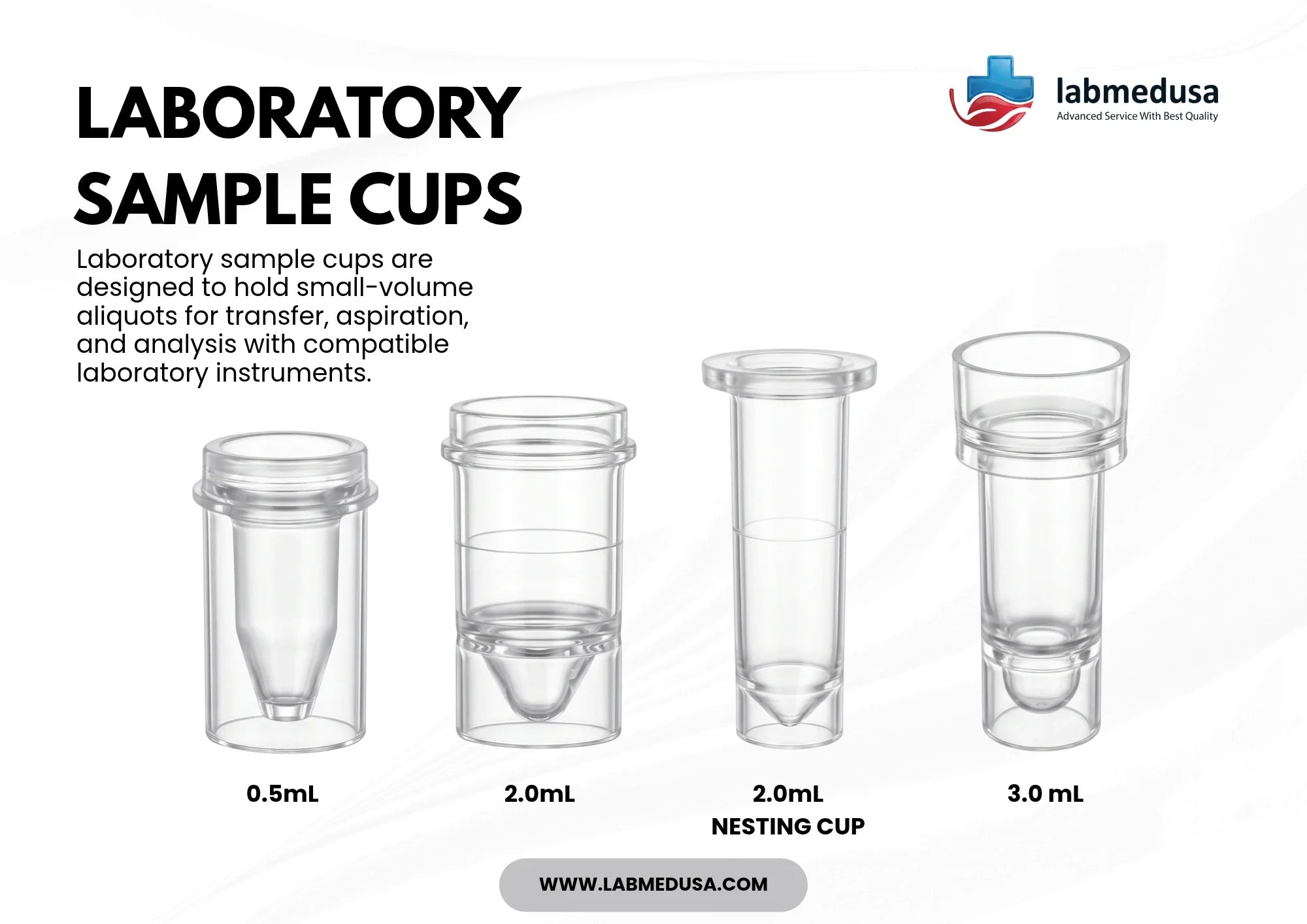
Small-volume sample cups are commonly used to present an aliquot of serum, plasma, urine, control material, or another validated liquid sample to a compatible laboratory analyzer. They are available in several designs, including multi-purpose sample cups and nesting sample cups, as well as capacities such as 0.5 mL, 2.0 mL, and 3.0 mL.
These small analyzer cups should not be confused with patient-facing urine collection cups or capped specimen transport containers. Most of the sample cups discussed here have an open top and no cap. They are intended for controlled bench or analyzer workflows, not for primary collection, leakproof transport, or long-term storage.
What Is a Laboratory Sample Cup?
A laboratory sample cup is a small disposable vessel that holds a measured portion, or aliquot, of a specimen for testing. After a specimen is collected in an appropriate primary container, laboratory personnel may transfer part of it into a sample cup so an analyzer probe can aspirate the liquid.
The cup helps position the sample at the height and location expected by compatible equipment. A conical or rounded lower section can also concentrate a smaller volume near the aspiration area. However, nominal cup capacity does not tell a laboratory how much specimen a particular test requires. Required volume depends on the analyzer, assay volume, dead volume, repeat testing needs, and the laboratory's validated procedure.
Multi-Purpose Sample Cups and Nesting Sample Cups
Although the terms are sometimes used together, these formats serve different physical setups.
Multi-purpose sample cups are placed directly into a compatible sample tray, rack, carousel, or adapter. Their outside diameter, height, rim, and bottom profile must match the receiving equipment. LabMedUSA offers open-top polystyrene options in 0.5 mL, 2.0 mL, and 3.0 mL capacities.
Nesting sample cups are designed to sit inside a compatible larger tube. This arrangement can help present a smaller-volume aliquot while the outer tube provides the footprint needed by the rack or direct-tube sampling system.
Comparing LabMedUSA Sample Cup Sizes
| Sample cup | Material | Approximate dimensions | Design | Practical consideration |
|---|---|---|---|---|
| 0.5 mL sample cup | Clear polystyrene (PS) | 13.55 mm outer diameter x 24.5 mm high | Open top, conical base, no cap | Small-volume format where the validated analyzer and assay permit a reduced aliquot |
| 2.0 mL sample cup | Clear polystyrene (PS) | 14.8 mm top outer diameter x 24.9 mm high | Open top, conical base, no cap | General small-volume analyzer and benchtop sample handling |
| 2 mL nesting sample cup | Clear laboratory-grade plastic | 16 mm diameter x 1.5 in high | Nesting analyzer cup | Intended to fit a compatible outer tube or direct-tube sampling setup |
| 3.0 mL sample cup | Clear polystyrene (PS) | 17 mm outer diameter x 38 mm high | Open top, no cap | Provides more nominal capacity when the workflow requires a larger aliquot |
Why Sample Cup Capacity Matters
A smaller cup can reduce the amount of liquid needed to place the sample within reach of an aspiration probe, but the smallest cup is not automatically the best choice. Laboratories should account for:
-
The analyzer's stated minimum sample volume
-
Probe dead volume and cup geometry
-
The number of tests ordered from the aliquot
-
Repeat, reflex, dilution, and quality-control requirements
-
The risk of bubbles, foam, fibrin, or particulates interfering with aspiration
-
The amount of sample that must remain in the primary container
A 0.5 mL cup may support some low-volume workflows, while a 2 mL or 3 mL format may offer more working volume for multiple tests. The actual fill volume should follow the assay instructions, analyzer instructions for use, and the laboratory's standard operating procedure.
Polystyrene vs. Polypropylene Sample Cups
Material is another important selection point. Polystyrene and polypropylene are both widely used for disposable laboratory consumables, but they do not have identical properties.
Polystyrene sample cups are rigid and clear, which makes the sample level and condition easy to inspect visually. Their dimensional rigidity can be helpful where consistent cup geometry and rack fit are important.
Polypropylene sample cups are generally less brittle and are used in many laboratory handling applications. A polypropylene nesting cup may be appropriate when that material and cup geometry match the intended tube, instrument, and method.
Neither material should be assumed compatible with every specimen, reagent, solvent, temperature, or instrument. Chemical concentration, exposure time, temperature, and test method all matter. Always compare the cup specification with the analyzer instructions, reagent documentation, and laboratory validation requirements.
Analyzer Compatibility Is More Than Capacity
Two cups can both hold 2 mL and still be incompatible with the same analyzer. Before purchasing laboratory analyzer sample cups, compare all of the following:
-
Top and base outer diameters
-
Overall cup height
-
Rim or flange geometry
-
Conical, rounded, or flat bottom profile
-
Stand-alone or nesting configuration
-
Required rack, carrier, carousel, or adapter
-
Material specified for the method
-
Analyzer probe reach and required dead volume
-
Cap, sterility, and single-use status
Do not rely on capacity alone or assume that a cup is universal. If a product page names a particular analyzer family, treat that information as a starting point and confirm the current instrument requirements with the manufacturer.
Good Practices for Small-Volume Sample Handling
Consistent handling helps reduce preventable workflow problems. Laboratories should follow their own validated procedures, but common considerations include:
-
Verify the cup item, capacity, material, dimensions, and analyzer compatibility before use.
-
Confirm that the primary specimen is correctly identified and prepared according to the applicable test procedure.
-
Transfer the required aliquot with a clean, appropriate pipette or transfer device.
-
Avoid introducing bubbles or touching the inside of the cup or rim.
-
Inspect the aliquot for volume and any condition that may affect the intended method.
-
Place the cup in the correct rack position, carrier, adapter, or outer tube.
-
Keep the sample traceable throughout the workflow according to the laboratory's identification system.
-
After testing, discard the single-use cup in the appropriate waste stream under the facility's exposure-control and biohazard procedures.
Because open-top sample cups are not sealed transport containers, they should be handled in a controlled work area. Never describe or use an uncapped analyzer cup as leakproof unless the exact product has a validated closure and an explicit leak-resistance specification.
Frequently Asked Questions About Laboratory Sample Cups
Are analyzer sample cups the same as urine collection cups?
No. A urine collection cup is designed for primary specimen collection and may include a lid, label, graduations, or transfer feature. An analyzer sample cup is much smaller and typically holds an aliquot after collection. The open-top products covered here are not substitutes for capped collection or transport containers.
Can the same sample cup be used with every chemistry analyzer?
No. Fit and function depend on exact dimensions, cup geometry, rack configuration, probe reach, and the analyzer manufacturer's requirements.
Does a 0.5 mL capacity mean every test can run from 0.5 mL?
No. Capacity is the amount the cup can nominally hold. The required sample volume must also cover instrument dead volume, all ordered assays, and any repeats or reflex tests.
Can disposable sample cups be reused?
Single-use sample cups should not be washed and reused. Reuse can introduce carryover, contamination, physical damage, or dimensional changes that affect the workflow.
Choosing the Right Laboratory Sample Cup
The right sample cup supports a clean, organized, and repeatable path from aliquot preparation to analyzer aspiration. Start with the instrument requirements, then compare capacity, dimensions, shape, material, and whether the workflow needs a stand-alone or nesting cup.
LabMedUSA offers bulk laboratory sample cups in 0.5 mL, 2.0 mL, nesting 2 mL, and 3.0 mL configurations for clinical, diagnostic, research, and laboratory testing workflows. Explore LabMedUSA laboratory and medical supplies or review the linked product specifications above. Before use, verify every sample cup against the analyzer instructions and your laboratory's validated procedure.



Leave a comment