



A Sharps Disposal Essential for Mobile Phlebotomists
Rose had been a mobile phlebotomist for nearly six years.
Her days started before sunrise and often ended long after most clinics had closed. She traveled from patient to patient, collecting blood samples in private homes, assisted living communities, rehabilitation centers, and skilled nursing facilities.
Like many mobile healthcare professionals, she had perfected her routine.
Tourniquets? Check.
Vacutainer tubes? Check.
Labels and specimen bags? Check.
But one piece of equipment rarely crossed her mind: her sharps disposal container.
That changed during a particularly busy week.
After completing several blood draws at different locations, Rose noticed how quickly used needles could accumulate during a shift. While organizing her supplies between appointments, she realized how important it was to have immediate access to a safe, reliable sharps container.
The experience reinforced a lesson every mobile phlebotomist eventually learns:
Safe sharps disposal isn't just about compliance it's about protecting yourself, your patients, your coworkers, and anyone who may come into contact with medical waste.
Why Sharps Disposal Matters in Mobile Phlebotomy
Unlike hospital laboratories or physician offices, mobile phlebotomists don't have the convenience of permanent sharps disposal stations nearby.
Every blood draw creates biohazard waste that must be safely contained until proper disposal can occur.
Used needles, butterfly sets, lancets, and other sharps present potential risks if not handled correctly.
That's why healthcare safety standards emphasize immediate disposal after use.
A quality sharps container helps prevent:
- Accidental needle-stick injuries
- Cross-contamination
- Exposure to bloodborne pathogens
- Improper transportation of biohazard waste
- Workplace safety violations
For professionals who spend most of their day on the road, portable sharps management becomes an essential part of daily operations.
The Challenges Mobile Phlebotomists Face
Mobile healthcare workers operate in constantly changing environments.
One appointment may take place in a private residence.
The next could be inside a nursing facility, hospice center, rehabilitation clinic, or workplace health screening event.
Each location presents unique challenges:
Limited Workspace
Many home visits provide little room for medical supplies. Bulky equipment can become difficult to manage during patient interactions.
Frequent Travel
Medical supplies must be transported safely between appointments without compromising specimen integrity or workplace safety.
Regulatory Compliance
Healthcare professionals must follow strict procedures regarding biohazard waste handling and sharps disposal.
Patient Safety
Patients often observe how healthcare providers manage medical waste. Safe disposal practices help build confidence and trust.
These challenges make compact, reliable sharps containers especially valuable for mobile healthcare professionals.
What Makes a Good Sharps Container for Mobile Phlebotomists?
Not all sharps containers are designed with mobile healthcare in mind.
The ideal container should balance safety, portability, and convenience.
Key features include:
Compact Size
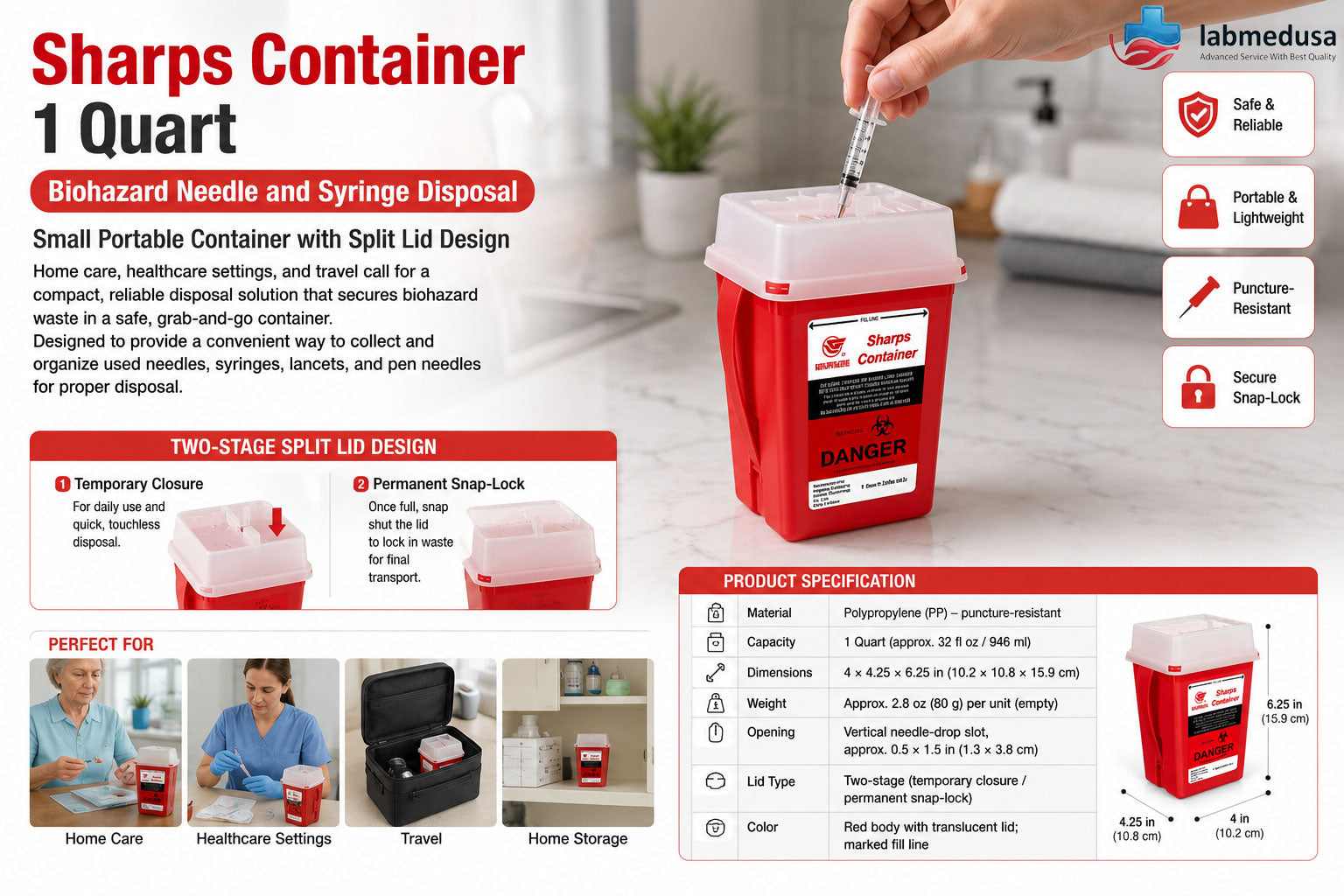
A 1-quart sharps container offers enough capacity for multiple patient visits while remaining small enough to fit inside a phlebotomy kit or supply bag.
Puncture-Resistant Construction
Durable polypropylene construction helps prevent punctures from needles and other sharps during transportation and handling.
Secure Lid Design
A two-stage lid system allows for convenient day-to-day use while providing a permanent locking mechanism when the container reaches capacity.
Lightweight Portability
Mobile professionals benefit from equipment that adds minimal weight while maximizing safety.
Clearly Marked Fill Line
Visual fill indicators help ensure the container is replaced before becoming overfilled.
How a 1-Quart Sharps Container Supports Mobile Healthcare Workflows
Many mobile phlebotomists prefer compact sharps containers because they integrate seamlessly into existing workflows.
A portable 1-quart sharps container can:
- Fit inside most mobile medical supply bags
- Occupy minimal vehicle storage space
- Provide immediate disposal access during blood draws
- Reduce the need to transport loose sharps
- Improve organization during multi-patient routes
The result is a safer, more efficient workflow that allows healthcare professionals to focus on patient care rather than waste management concerns.
Best Practices for Needle Disposal During Mobile Blood Collection
To maintain workplace safety, mobile phlebotomists should follow several key sharps disposal practices:
Dispose Immediately After Use
Used needles should be placed directly into an approved sharps container immediately after blood collection.
Never Overfill the Container
Replace containers before reaching the fill line to maintain safe disposal conditions.
Use Temporary Closure During Transport
When traveling between patient locations, utilize the temporary closure feature to help secure contents.
Engage Permanent Locking When Full
Once capacity is reached, activate the permanent snap-lock mechanism before final disposal.
Follow Local Disposal Regulations
Sharps disposal requirements vary by jurisdiction. Always comply with local healthcare and medical waste regulations.
A Small Container That Plays a Big Role
For many mobile phlebotomists, the most important equipment isn't always the most expensive.
Sometimes it's the simple tools that quietly improve safety every single day.
A reliable sharps container helps protect healthcare professionals from accidental exposure, supports regulatory compliance, and creates a safer environment for patients and caregivers alike.
Whether collecting blood samples in private homes, assisted living facilities, or community healthcare settings, proper sharps disposal remains one of the most important responsibilities in mobile healthcare.
Because at the end of the day, every successful blood draw should end the same way:
With safe, secure disposal of the sharps that made it possible.
Frequently Asked Questions
What size sharps container is best for mobile phlebotomists?
A 1-quart sharps container is often preferred because it balances portability and capacity, making it ideal for daily patient visits.
Can a sharps container be transported in a vehicle?
Yes. Containers designed with secure closure systems can be safely transported according to workplace policies and local regulations.
What should be disposed of in a sharps container?
Needles, syringes, lancets, butterfly needles, pen needles, and other approved sharps should be disposed of in a puncture-resistant sharps container.
Why is a split-lid design beneficial?
A two-stage split lid allows for convenient daily use while providing a permanent locking mechanism when the container is ready for final disposal.
Is a sharps container required for mobile phlebotomy?
Proper sharps disposal containers are considered a fundamental safety tool for handling used needles and other sharps generated during blood collection procedures.
Find the Sharps Container 1 Quart here


Leave a comment